
Compare ZIP Codes Side by Side: Cost & Location Guide
Learn how to compare ZIP codes side by side for real estate, housing costs, commute patterns, and affordability using simple cost comparison tools.
10 min read2,021 wordsZip Cost Ledger editorial
ZIP code comparisons help you understand how everyday costs, housing markets, and local conditions change from one area to another. Whether you are planning a move, researching a real estate decision, or simply trying to make sense of neighborhood differences, the right zip code data can turn a vague question into a clearer choice. This guide explains how a zip code comparison works, what to look at first, and how a cost comparison tool like Zip Cost Ledger can support more practical decisions.
What does it mean to compare ZIP codes side by side?
To compare ZIP codes side by side means looking at two or more areas using the same categories, such as housing costs, typical expenses, local amenities, commute patterns, and overall affordability. Instead of reviewing each location separately, a side-by-side view helps you spot differences quickly and understand what those differences could mean for your budget, lifestyle, or plans.
A ZIP code is more than a mailing label. It often reflects a specific local market with its own home prices, rental patterns, transportation habits, school access, services, and cost pressures. Two neighborhoods in the same city can feel very different financially, and two ZIP codes only a few miles apart may have noticeably different housing demand or household expenses.
That is why people search for phrases like “Compare ZIP codes side by side” when they want a simpler way to organize local information. A clear comparison can help you move past guesswork and focus on the numbers and practical trade-offs that matter. You can also find specific ZIP code profiles to dive deeper.
ZIP code data turns location research into a practical decision
Good zip code data gives structure to questions that are otherwise hard to answer. “Is this area affordable?” becomes more useful when you break it into smaller questions: What are homes selling for? How do common expenses compare? Is the area likely to stretch or support your monthly budget?
A strong zip code comparison does not need to overwhelm you with every possible detail. In fact, the best comparisons are usually the ones that make a few important differences easy to understand. If you are buying a home, house values by zip code and home prices by zip code may be your first priority. If you are relocating for work, your focus may shift toward the cost of living, commuting, and how far your income may go in each area.
Useful ZIP code research often includes:
- Housing costs: Home values, listing trends, rent expectations, and affordability pressure.
- Everyday expenses: Categories such as groceries, utilities, transportation, or services, when available.
- Lifestyle fit: Access to work, schools, healthcare, parks, shopping, and public transportation.
- Market context: Whether the area feels more expensive, more stable, more competitive, or more budget-friendly than nearby ZIP codes.
- Long-term relevance: Whether the location still makes sense if your household, job, or financial priorities change.
The goal is not to find a “perfect” ZIP code. The goal is to understand what each area asks from you financially and what it gives back in return.
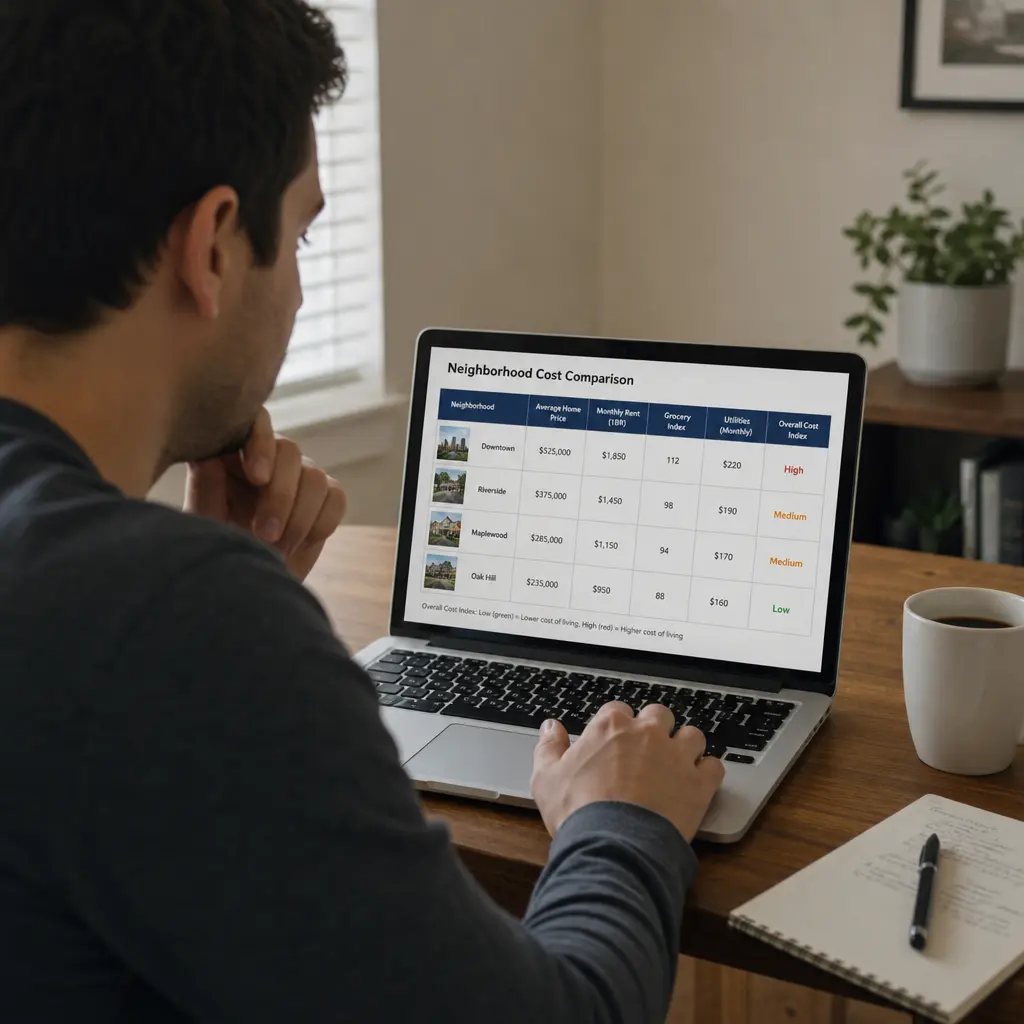
person comparing neighborhood cost data on a laptop
Housing costs often drive the biggest differences
For many households, housing is the largest line item in the budget, so it deserves early attention. Looking at house values by zip code can help homeowners, buyers, investors, and movers understand how one local market compares with another. Even if two ZIP codes are close together, they may have different price expectations because of lot size, housing age, school boundaries, demand, commute routes, or local amenities.
Home prices by zip code can also help clarify trade-offs. One area may offer lower prices but longer travel times. Another may cost more upfront but place you closer to work, transit, or services. A third may have fewer available homes, which can affect competition and flexibility.
When reviewing housing data, avoid treating a single number as the whole story. A median or average can be helpful, but it may hide important differences between condos, starter homes, larger properties, and newly renovated houses. It is better to look at the general direction of the market and then ask how closely the data matches the type of home you actually want.
If you are comparing areas for a future move, use housing figures as a starting point rather than a final answer. A lower purchase price may not always mean a lower total cost if taxes, insurance, utilities, maintenance, or transportation expenses are higher. Likewise, a higher-priced area may still be manageable if it reduces other costs or better fits your day-to-day life.
How can a cost of living comparison by ZIP code help you plan?
A cost of living comparison by zip code helps you estimate how your regular expenses may change from one location to another. It is especially useful when you are relocating, evaluating a job offer, choosing between neighborhoods, or deciding whether your current area still fits your financial goals.
Cost of living is not one single expense. It is the combined effect of housing, transportation, utilities, groceries, healthcare, taxes, childcare, insurance, and other recurring costs. Some of these categories vary dramatically by location, while others may change only slightly. The key is to identify which costs are most likely to affect your household.
For example, a ZIP code with lower home prices may still be costly if most residents need longer car commutes. Another area may have higher housing costs but better access to transit, shorter drives, or more nearby services. When you compare cost of living by zip code, you are really asking how the whole financial picture changes, not just whether one place is cheaper on paper.
A practical comparison can help you:
- Estimate monthly affordability. Look beyond purchase price or rent and consider recurring costs.
- Evaluate income fit. Ask whether your current or expected income supports the area comfortably.
- Spot hidden trade-offs. Transportation, insurance, and utilities can shift the real cost of a location.
- Compare similar options. Narrow your search to ZIP codes that match your budget and priorities.
- Plan with fewer surprises. Use the data to prepare questions before making a move or offer.
This type of comparison is useful for individuals and families, but it can also help real estate professionals, employers, remote workers, and researchers understand local affordability patterns.
A cost comparison tool makes the process easier
Manually collecting local data can be time-consuming. You might look at real estate sites for housing, government sources for regional information, maps for commute times, and calculators for general affordability. Each source may be useful, but jumping between them can make it harder to see the whole picture.
A cost comparison tool brings the process into a more organized format. Instead of relying on scattered notes, you can compare key categories in one place and focus on what the differences mean. Tools such as Zip Cost Ledger are helpful because they are built around the idea that location-based costs should be easier to review, not buried in disconnected searches.
The most useful tools do not simply display numbers. They help users interpret differences. If one ZIP code has higher housing costs but lower transportation needs, that matters. If another area looks affordable but has fewer nearby services, that also matters. A good comparison supports better questions, which often lead to better decisions.
When choosing or using a tool, look for clarity over complexity. The data should be easy to scan, the categories should make sense, and the comparison should help you understand practical differences without requiring advanced research skills.
The best comparisons focus on your real priorities
Not every ZIP code comparison should use the same checklist. A retiree, a first-time homebuyer, a renter, a remote worker, and a growing family may all care about different details. The smartest approach is to start with your reason for comparing and let that shape the data you review.
If you are buying a home, start with affordability and housing supply. If you are moving for a job, compare commute expectations and how your salary may translate locally. If you are choosing between nearby neighborhoods, focus on the differences that affect daily life, such as transportation, services, schools, and recurring costs.
Before you rely on any comparison, ask yourself:
- What decision am I trying to make? A relocation decision needs different data than casual market research.
- Which costs affect me most? Housing may dominate, but transportation, childcare, or healthcare may be just as important for some households.
- Am I comparing similar property types? A condo-heavy ZIP code and a single-family-home market may not tell the same story.
- Do I need current local context? Markets and expenses change, so fresh data is more useful for active decisions.
- What trade-off am I willing to accept? Lower costs, more space, better access, and shorter commutes rarely line up perfectly.
This keeps the comparison personal and practical. You are not just ranking ZIP codes. You are deciding which location best supports the life or investment you have in mind.
What mistakes should you avoid when comparing ZIP codes?
The biggest mistake is treating one number as the final answer. ZIP codes are complex, and a single average cost, home value, or affordability score can hide important context.
Another common mistake is comparing areas without considering your own situation. A ZIP code that looks expensive for one household may be reasonable for another, depending on income, commute, household size, debt, and lifestyle. Likewise, an area that appears affordable may not be the best fit if it adds stress, distance, or recurring expenses.
Watch out for these pitfalls:
- Ignoring transportation costs: A cheaper ZIP code may become less affordable if it requires more driving.
- Comparing unlike homes: Make sure home prices by zip code reflect the kind of property you would actually consider.
- Overlooking recurring expenses: Utilities, insurance, taxes, and services can change the total cost picture.
- Assuming nearby areas are the same: ZIP codes close to each other can have different housing markets and cost patterns.
- Using outdated information: Local prices and expenses can shift, especially in active markets.
A reliable comparison should make you more curious, not less. If the data reveals a surprising difference, treat it as a prompt to investigate further.
Turning ZIP code comparisons into confident next steps
Once you have compared your options, organize your findings into a short decision list. Choose the two or three ZIP codes that appear to fit best, then review them against your budget, housing preferences, commute needs, and lifestyle priorities. This helps prevent analysis paralysis and keeps the research connected to action.
A simple next-step checklist can help:
- Choose your comparison ZIP codes. Start with realistic locations you would actually consider.
- Review housing first. Look at house values by zip code, home prices by zip code, and the type of inventory available.
- Layer in cost of living. Compare recurring expenses and consider how they affect your monthly budget.
- Check lifestyle fit. Think about commute, services, schools, healthcare, and convenience.
- Identify trade-offs. Write down what each ZIP code offers and what it may require you to give up.
- Use local follow-up. If you are making a major decision, verify details with current listings, local professionals, or firsthand visits.
The best outcome is not just knowing which ZIP code is cheaper. It is understanding which area makes the most sense for your goals.
ZIP code comparisons make location choices clearer
Comparing ZIP codes is a practical way to bring order to one of the most important location questions: what will life cost here, and how does it compare somewhere else? With the right zip code data, you can evaluate housing, affordability, everyday expenses, and lifestyle factors in a more balanced way.
A tool like Zip Cost Ledger can make that process easier by helping you compare ZIP codes side by side and focus on the details that matter. Whether you are researching a move, studying real estate options, or simply trying to understand local cost differences, a thoughtful zip code comparison can turn scattered information into a clearer decision.