
CA Property Tax Insights: ZIP Code Records & Rates
California property tax and hazard records by ZIP code, and how voter-approved debt and parcel assessments shape the final tax bill.
19 min read3,767 wordsZip Cost Ledger editorial
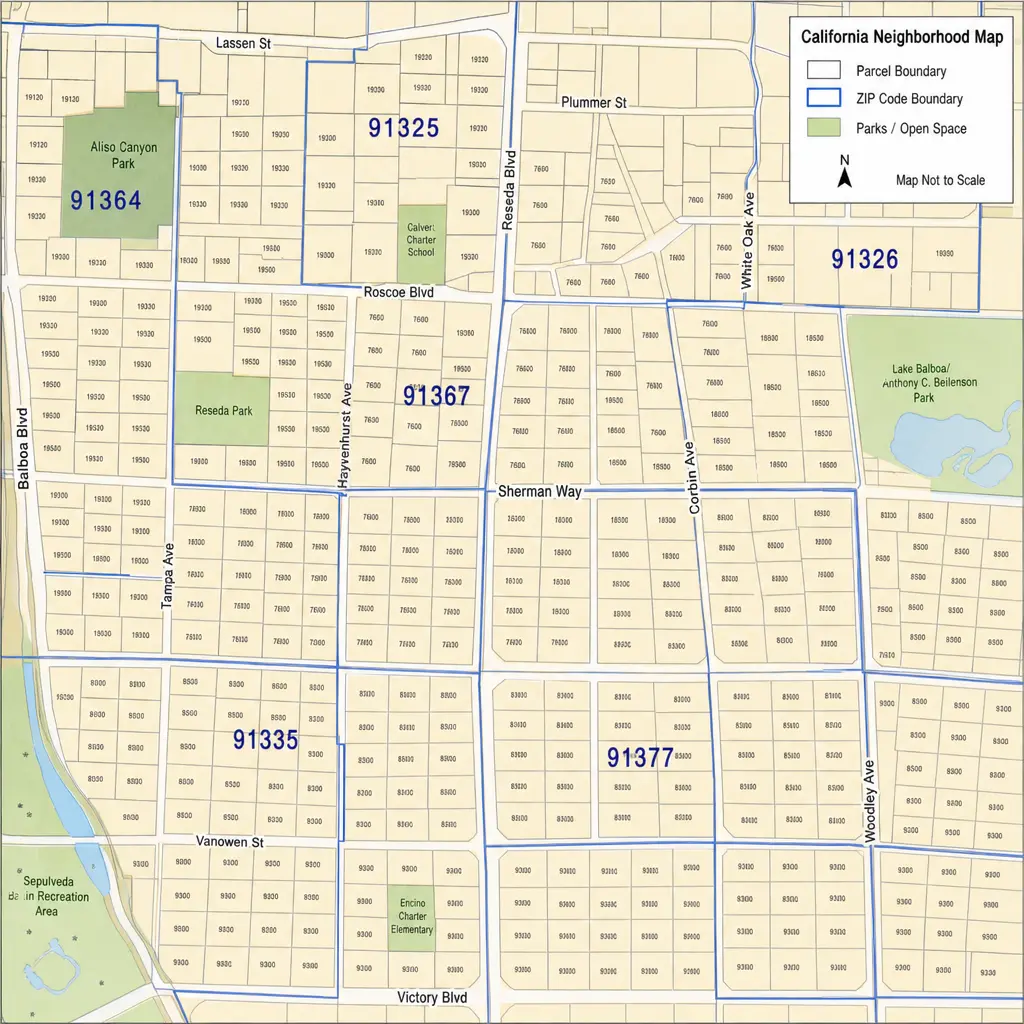
California property tax is easier to understand when you separate the statewide rule from the local add-ons. The base system starts with assessed value, Proposition 13, and a 1% general levy, but the amount on a real tax bill can change by county, city, school district, bond area, parcel assessment, and even the history of a specific property. This guide explains how to research California property tax and hazard records by ZIP code without mistaking a ZIP code for the true tax boundary.
How much is property tax in California?
In California, the general answer is that real property is taxed at 1% of taxable assessed value, plus additional rates needed for voter-approved indebtedness and other local items that may appear on the bill. That means the ca state property tax rate is not a single all-in number for every home; the statewide framework starts at 1%, while local debt service, special taxes, direct assessments, exemptions, and parcel-specific factors determine the final bill. (boe.ca.gov)
A simple estimate starts with this formula:
- Taxable assessed value multiplied by the applicable ad valorem tax rate
- Minus applicable exemptions, such as the homeowners’ exemption when the property qualifies
- Plus direct charges, special assessments, parcel taxes, or Mello-Roos items that apply to that parcel
- Plus or minus supplemental bills or refunds if there was a recent sale, ownership change, or new construction
For example, a home with a taxable assessed value of $800,000 would have a 1% general levy of about $8,000 before local voter-approved debt and other bill items. That estimate is useful for budgeting, but it is not the same as the final property tax amount California counties collect because direct levies and special assessments can be fixed charges rather than percentage-based taxes. The California Board of Equalization also notes that exemptions generally apply to ad valorem property taxes, not to every direct levy or special tax shown on a bill. (boe.ca.gov)
ZIP codes are a starting point, not the tax boundary
It is common to search for property tax information California homeowners can use by typing a ZIP code into a search bar. That is a reasonable first step, especially when comparing neighborhoods, but it can be misleading if you stop there. ZIP codes are postal delivery areas, while property taxes are tied to parcels, counties, revenue districts, school districts, bond areas, and tax-rate areas.
California’s tax-rate mapping system assigns tax-rate area numbers to geographic areas with different distributions of revenue among taxing jurisdictions, and county auditors use those areas to allocate property tax revenues. In practical terms, the true tax lookup unit is usually the parcel, not the ZIP code. A single ZIP code may include incorporated and unincorporated areas, multiple school districts, different bond measures, and different special assessment districts. (boe.ca.gov)
This is why two homes in the same ZIP code can have different effective tax bills even if they look similar online. One may sit inside a community facilities district, another may not. One may be subject to a school bond rate that differs from the next neighborhood over. One may have a much lower assessed value because the owner bought decades ago, while another was recently reassessed at a new market value after a purchase.
Can you really look up California property tax by ZIP code?
Yes, you can use ZIP code research to narrow your search, but you should confirm the exact tax amount with the county parcel record, tax bill, assessor record, or auditor-controller tax-rate tool. A ZIP code can help you identify the right county, city, and general neighborhood, but the parcel’s Assessor’s Parcel Number, often called an APN, is what usually leads you to the most reliable tax record.
A good ZIP-code-based lookup process looks like this:
- Start with the address or ZIP code. Use it to identify the county and city or unincorporated community.
- Find the APN. County assessor, recorder, or property tax portals often let you search by address.
- Open the most recent tax bill. Look for assessed value, tax-rate area, general levy, voter-approved debt, direct assessments, and special taxes.
- Check the county auditor or tax-rate lookup. In Los Angeles County, for example, the Auditor-Controller groups taxable properties into Tax Rate Areas that appear on tax bills. (onlineapps.auditor.lacounty.gov)
- Look for supplemental activity. If the home sold recently or had major improvements, a new annual bill may not show the full future cost yet.
- Review hazard records separately. Hazard tools can show fire, flood, earthquake, or tsunami exposure, but those are not the same as property tax rates.
This approach gives you a cleaner picture than relying on an “average California property tax” estimate. Averages can help you compare counties at a high level, but a buyer, owner, investor, or lender needs parcel-level detail before making a decision.
The California real estate tax rate begins with Proposition 13
The phrase California real estate tax rate usually refers to the tax rate applied to assessed value, but assessed value is just as important as the rate. Proposition 13 changed California from a market-value-based property tax system to an acquisition-value-based system for most real property. Under this structure, properties are generally reassessed to current market value when there is a change in ownership or completed new construction, and annual increases in the base year value are generally limited to no more than 2% unless one of those reassessment events occurs. (boe.ca.gov)
That structure creates a major difference between market value and taxable assessed value. A home may be worth far more today than its assessed value if it has been owned for a long time. Another home next door may have a much higher assessed value because it sold recently. The tax rate may be similar, but the taxable base can be dramatically different.
The assessed value is also tied to the lien date. California’s property tax calendar identifies January 1 at 12:01 a.m. as the lien date for taxable property. That date matters because ownership, eligibility for certain exemptions, and the assessment roll are tied to specific calendar rules rather than casual estimates. (boe.ca.gov)
For homeowners, the key takeaway is simple: do not estimate future tax solely from the seller’s current bill. If the property has appreciated significantly, a new purchase can reset the assessed value, and the buyer’s future property tax amount may be much higher than what the current owner pays.
What county averages can and cannot tell you
Searches for California county property tax rates are useful when you are comparing broad regions, but county averages are not parcel-specific rates. The Board of Equalization publishes property tax allocation data that includes county-level average tax rate information, and those averages help show how local voter-approved debt and other countywide patterns differ. The BOE data is still a broad view, not a substitute for the parcel’s own tax bill. (boe.ca.gov)
County averages can help answer questions such as:
- Is one county generally higher or lower than another?
- Are local bond measures adding noticeably to the 1% base?
- Does a region tend to have many special districts or newer developments?
- Should a buyer budget extra time to research Mello-Roos, school bonds, or parcel taxes?
County averages cannot reliably answer:
- What is the exact tax bill for this house?
- Does this property have a Mello-Roos special tax?
- Which bond rates apply to this parcel?
- Will the next owner’s bill increase after reassessment?
- Does the current tax bill include all future supplemental amounts?
A countywide average is like a weather forecast for the region: useful, but not enough to decide whether to bring a jacket to a specific address. For property tax planning, the “specific address” is the parcel.
Why do nearby homes have different California property tax amounts?
Nearby homes often have different tax amounts because California’s system depends on each parcel’s assessed value, purchase history, exemption status, local debt rates, and direct charges. Even if two homes share the same ZIP code, school district, and street, one owner may be taxed on a much older assessed value while another may be taxed on a recent purchase price or new construction value. (boe.ca.gov)
The biggest drivers usually include the following.
Purchase date and assessed value
Under Proposition 13, a property’s base year value is generally established when the property is purchased, newly constructed, or undergoes a change in ownership. That base is then adjusted over time, usually subject to the annual cap rules, rather than automatically rising to current market value every year. This is why a longtime owner and a recent buyer can pay very different taxes on similar homes. (boe.ca.gov)
Local voter-approved debt
The 1% levy is not always the full ad valorem rate. Proposition 13 allows rates needed for voter-approved indebtedness to be added to the 1% rate, and those additional rates can vary within a county. If a parcel is in a bond area that another parcel is not, the tax rate can differ even when the homes are close together. (boe.ca.gov)
Direct assessments and special taxes
Some bill items are not based on assessed value. They may fund services, districts, maintenance, lighting, landscaping, schools, flood control, utilities, weed abatement, or community facilities. The BOE notes that annual bills may include special assessments, special taxes, direct levies, delinquent utility billings, weed and hazard abatement charges, and Mello-Roos Bonds, and that these are not all treated as ad valorem property taxes. (boe.ca.gov)
Exemptions
The homeowners’ exemption can reduce taxable value by $7,000 for a qualifying owner-occupied principal residence, and the homeowner generally files once with the county assessor. Because the statewide 1% levy applies to assessed value, the BOE’s taxpayer materials describe this as generally equating to about $70 in property tax savings before considering items not affected by the exemption. (boe.ca.gov)
Supplemental assessments
A purchase or completed new construction can trigger supplemental assessment activity. Supplemental bills are separate from the regular annual bill and reflect a prorated increase or decrease in assessed value for the period after the change event. BOE guidance specifically notes that supplemental bills are sent in addition to the annual bill. (boe.ca.gov)
A practical way to estimate a property tax amount in California
If you are asking, “how much is property tax in California for this home?” the most practical answer comes from a step-by-step estimate. You do not need to become a tax professional, but you do need to separate the predictable pieces from the parcel-specific pieces.
Use this checklist when reviewing a property:
- Confirm the current assessed value. Do not assume the list price, market estimate, or seller’s tax amount is the same as taxable assessed value.
- Estimate the reassessed value after purchase. For a typical arm’s-length purchase, buyers often budget around the purchase price as the new assessed value, while remembering that county assessment rules and exceptions can affect the result.
- Apply the 1% base levy. This creates a rough starting point.
- Add local ad valorem debt rates. Look for the tax-rate area or county auditor tax-rate lookup.
- Add fixed charges. Review the tax bill for direct assessments, parcel taxes, Mello-Roos, lighting districts, sanitation charges, or similar items.
- Subtract qualifying exemptions. If you will occupy the property as your principal residence, review the homeowners’ exemption requirements with the county assessor.
- Plan for supplemental bills. New owners should not assume the mortgage escrow or annual bill captures every amount due after closing.
For a rough buyer estimate, many people start with “a bit above 1% of the purchase price,” then add known parcel charges from the current tax bill. That shortcut can be useful for early budgeting, but it should not replace a county record review. In newer developments, special taxes or direct assessments can be large enough to change the monthly affordability picture.
Supplemental tax bills are a common surprise
Supplemental tax bills often surprise California buyers because they may arrive after closing and separately from the regular secured property tax bill. BOE guidance explains that changes in ownership or completed new construction are “supplemental events” and can result in supplemental bills in addition to the annual property tax bill. The supplemental assessment generally covers the portion of the fiscal year after the event, rather than simply duplicating the annual bill. (boe.ca.gov)
This matters when a seller has a low assessed value. Suppose the seller’s annual bill reflects a very old assessed value, but the buyer pays current market price. The county may later issue a supplemental bill for the difference between the old roll value and the new assessed value, prorated for the relevant period. The buyer may also receive the regular annual bill, so the timing can feel confusing even when the math is lawful.
Before closing, ask escrow, your lender, or the county tax collector how supplemental bills are handled. If your mortgage payment includes an impound or escrow account, ask whether supplemental bills are included or whether they will be mailed directly to you. BOE guidance says supplemental bills are sent directly to the property owner and recommends paying the bill or contacting the lender to discuss who should pay it. (boe.ca.gov)
Property tax due dates and timing
California’s property tax calendar follows a recurring cycle. The lien date is January 1, county tax bills are generally mailed or electronically transmitted on or before November 1, the first installment is delinquent if unpaid by December 10 at 5:00 p.m. or close of business, the second installment is due February 1, and the second installment becomes delinquent if unpaid by April 10 at 5:00 p.m. or close of business. If a date falls on a weekend or legal holiday, the calendar notes that the action may generally be done on the next business day. (boe.ca.gov)
A simple homeowner calendar looks like this:
- January 1: Lien date for taxable property
- By early November: Watch for the annual secured tax bill
- December 10: First installment delinquency deadline
- February 1: Second installment due date
- April 10: Second installment delinquency deadline
- After a purchase or new construction: Watch for possible supplemental bills
Do not rely only on receiving a paper bill. Counties often provide online payment portals, parcel searches, and electronic reminders, but the obligation to pay does not necessarily disappear because mail was delayed or sent to an old address. When in doubt, search the county tax collector’s portal by APN or property address.
Hazard records belong in the same research file
Property tax research tells you what a parcel may cost in taxes. Hazard research tells you what natural or environmental risks may affect ownership, insurance, maintenance, safety, and resale. The keyword phrase California property tax and hazard records by ZIP code brings these topics together because buyers often want one neighborhood-level picture before they commit to a property.
California’s MyHazards tool allows the public to enter an address, city, ZIP code, or map location to review hazards such as earthquake, flood, fire, and tsunami, along with recommended risk-reduction actions. That makes it a useful ZIP-code starting point, especially when you are scanning several neighborhoods before drilling down to a specific address. (myhazards.caloes.ca.gov)
Fire hazard research should include CAL FIRE and Office of the State Fire Marshal resources. Fire Hazard Severity Zones are classified as Moderate, High, or Very High, and the maps are based on factors that influence fire likelihood and behavior, such as fuels, terrain, fire weather, embers, and fire history. CAL FIRE also emphasizes that these maps evaluate “hazard,” not the individualized “risk” of loss for a particular improved property. (osfm.fire.ca.gov)
For flood research, FEMA’s Flood Map Service Center is the standard place to search flood map products by address or community. For wildfire mitigation and insurance-related steps, the California Department of Insurance’s Safer from Wildfires program organizes actions around the structure, immediate surroundings, and community. (emilms.fema.gov)
What to gather before buying, selling, or appealing
A little document organization can prevent expensive misunderstandings. If you are comparing homes, refinancing, planning a remodel, appealing an assessment, or preparing to sell, create a parcel research folder for each property.
Include these records:
- Assessor parcel page: APN, assessed land value, assessed improvement value, exemption status, and ownership information where available
- Current annual tax bill: general levy, debt service, direct assessments, special taxes, and total due
- Tax-rate area information: the TRA number and any county auditor rate detail available
- Payment history: paid, unpaid, defaulted, or delinquent amounts
- Supplemental bill history: especially after recent transfers or construction
- Mello-Roos or community facilities district disclosures: annual amount, maximum amount, escalation terms, and expiration details when applicable
- Hazard maps: MyHazards, CAL FIRE fire zone maps, FEMA flood maps, and any local jurisdiction hazard tools
- Insurance notes: carrier feedback, FAIR Plan issues if relevant, mitigation requirements, and inspection requests
- Permit and construction records: useful for understanding new construction, remodeling, and possible reassessment issues
If you are selling, this same folder can help buyers understand the property more quickly. If you are buying, it can help you compare homes on a true monthly cost basis rather than focusing only on price and mortgage payment. If you are appealing, it helps you distinguish between disagreement with the tax system and a specific disagreement with assessed value.
Assessment appeals and value reviews
If you believe the assessed value is wrong, the next step is not simply refusing to pay. California has a formal assessment appeal process. The BOE explains that property owners can appeal the value appearing on the regular assessment roll by filing an Assessment Appeal Application during the regular filing period with the clerk of the board of supervisors or assessment appeals board, and regular filing periods vary by county. (boe.ca.gov)
Appeals usually focus on value, not whether you like the amount of tax. Useful evidence may include comparable sales, appraisals, property condition information, documentation of damage, or evidence that the enrolled value does not reflect the applicable rules. If your concern is a direct assessment, Mello-Roos charge, utility lien, or special tax, the assessor may not be the office that can change it; you may need to contact the levying district, auditor-controller, tax collector, or another local agency.
Pay close attention to deadlines. Filing periods and supplemental bill appeal windows can be strict, and missing a deadline can limit your options. If the amount is large or the situation involves inheritance, entity transfers, new construction, disaster damage, or Proposition 19, consider speaking with a qualified California property tax professional or attorney.
Special situations that change the analysis
Most homeowners only need the basic framework: assessed value, 1% levy, local add-ons, exemptions, and due dates. Some situations, however, deserve extra care.
New construction and major remodeling
Completed new construction can trigger reassessment for the new improvement value. Not every repair or maintenance project is treated the same way, so it is important to review county assessor guidance before assuming a remodel will or will not affect taxes. BOE materials describe new construction as one of the key events that can create a new assessed value and supplemental assessment. (boe.ca.gov)
Inherited property and family transfers
Transfers between family members can be complex. Proposition 19 changed major rules for intergenerational exclusions and base year value transfers, with operative dates in 2021. Because qualification depends on specific facts, forms, deadlines, occupancy, and property type, do not rely on a ZIP-code estimate or the prior owner’s tax bill when planning an inheritance or family transfer. (boe.ca.gov)
Homeowners who are 55 or older, severely disabled, or disaster victims
Proposition 19 also created or modified base year value transfer opportunities for qualifying homeowners, including persons at least age 55, severely disabled homeowners, and victims of wildfire or natural disaster. The rules can allow a qualifying homeowner to transfer a base year value to a replacement principal residence under specified conditions, but the claim process is not automatic through escrow. (boe.ca.gov)
Declines in market value
If market value falls below the current factored base year value, a temporary decline-in-value review may be possible. California’s Proposition 8 decline-in-value process is separate from the normal Proposition 13 inflation adjustment, and values can later rise more than 2% in a recovery year as long as they do not exceed the factored base year value absent a reassessment event. (boe.ca.gov)
A smart way to compare ZIP codes
When comparing ZIP codes, think in layers. The ZIP code helps you organize your search, but each layer brings you closer to the true ownership cost.
Use this comparison method:
- Neighborhood layer: Compare ZIP codes for location, schools, commute, amenities, and broad county tax patterns.
- Jurisdiction layer: Identify city versus unincorporated county, school district, fire district, utility district, and community facilities district.
- Parcel layer: Pull the APN, assessed value, current tax bill, direct assessments, and tax-rate area.
- Transaction layer: Estimate post-purchase reassessment, supplemental bills, exemptions, and escrow treatment.
- Hazard layer: Review fire, flood, earthquake, tsunami, and local hazard records.
- Insurance layer: Ask insurers about availability, mitigation requirements, deductibles, and documentation.
- Long-term layer: Consider future bond changes, special tax escalation, planned development, and likely maintenance costs.
This method works for buyers, owners, real estate agents, investors, and anyone comparing the average California property tax burden across communities. It avoids the two biggest mistakes: treating ZIP code averages as parcel-level facts and treating the seller’s current bill as the buyer’s future bill.
Key takeaways for California property tax research
California property tax is not random, but it is layered. The statewide foundation is Proposition 13 and the 1% general levy, while the real bill depends on assessed value, voter-approved debt, special assessments, exemptions, and parcel-specific charges. The most reliable answer to “how much is property tax in California?” comes from the county record for the exact parcel, not from a ZIP-code average.
If you remember only a few points, make them these:
- The 1% figure is the starting point, not always the final bill.
- ZIP codes are useful for searching, but tax-rate areas and parcels determine the details.
- Similar homes can have very different tax bills because of purchase date and assessed value.
- County averages help with broad comparison, not exact budgeting.
- Supplemental bills can arrive after closing and should be planned for.
- Direct assessments, parcel taxes, and Mello-Roos charges can materially affect monthly cost.
- Hazard records should be reviewed alongside tax records, especially for fire and flood exposure.
- The county assessor, auditor-controller, and tax collector each handle different parts of the system.
The best approach is to build your estimate from the parcel up: APN, assessed value, tax-rate area, current bill, direct charges, exemptions, supplemental risk, and hazard records. That gives you a clearer view of both the tax obligation and the broader cost of owning property in California.
Related guides
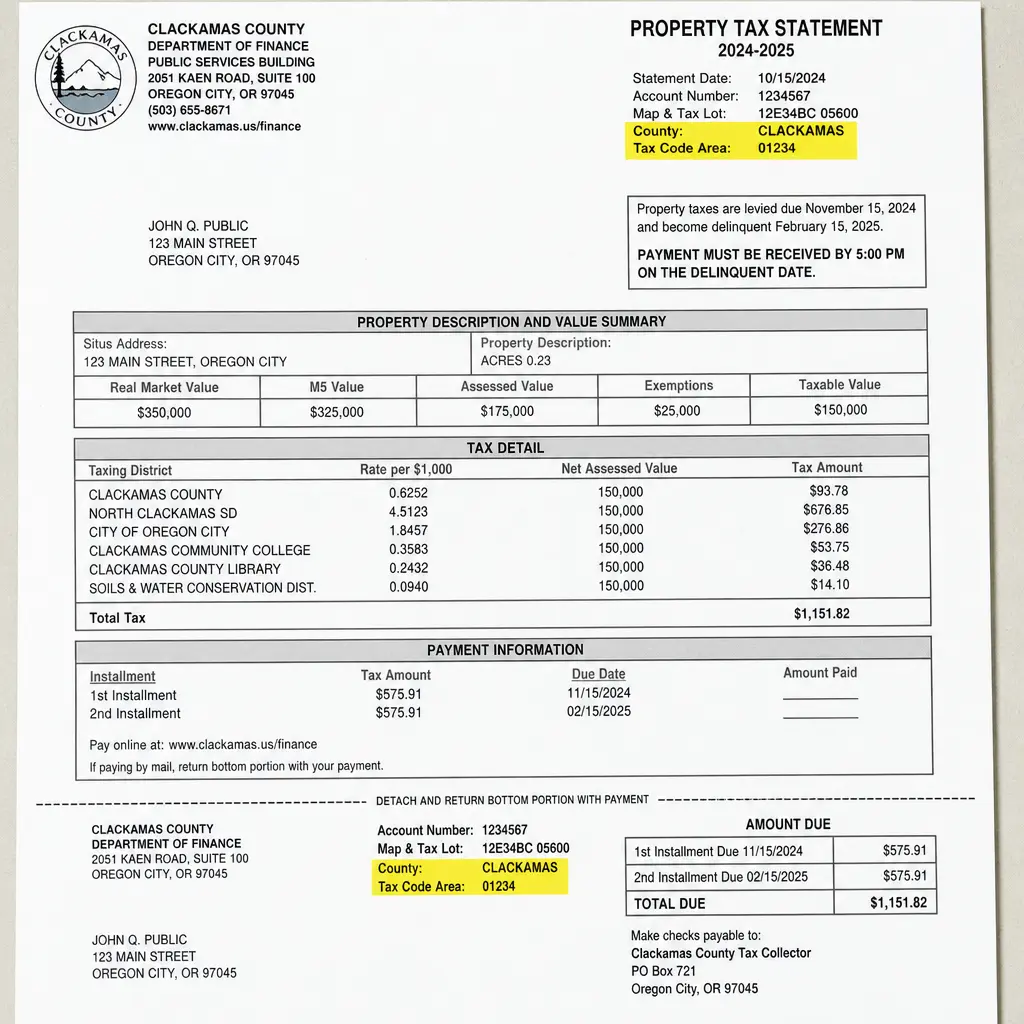
Oregon Property Tax Rates by County & ZIP Code Guide
Oregon property taxes can feel confusing because there is no single statewide rate that applies to every home.
· 8 min read
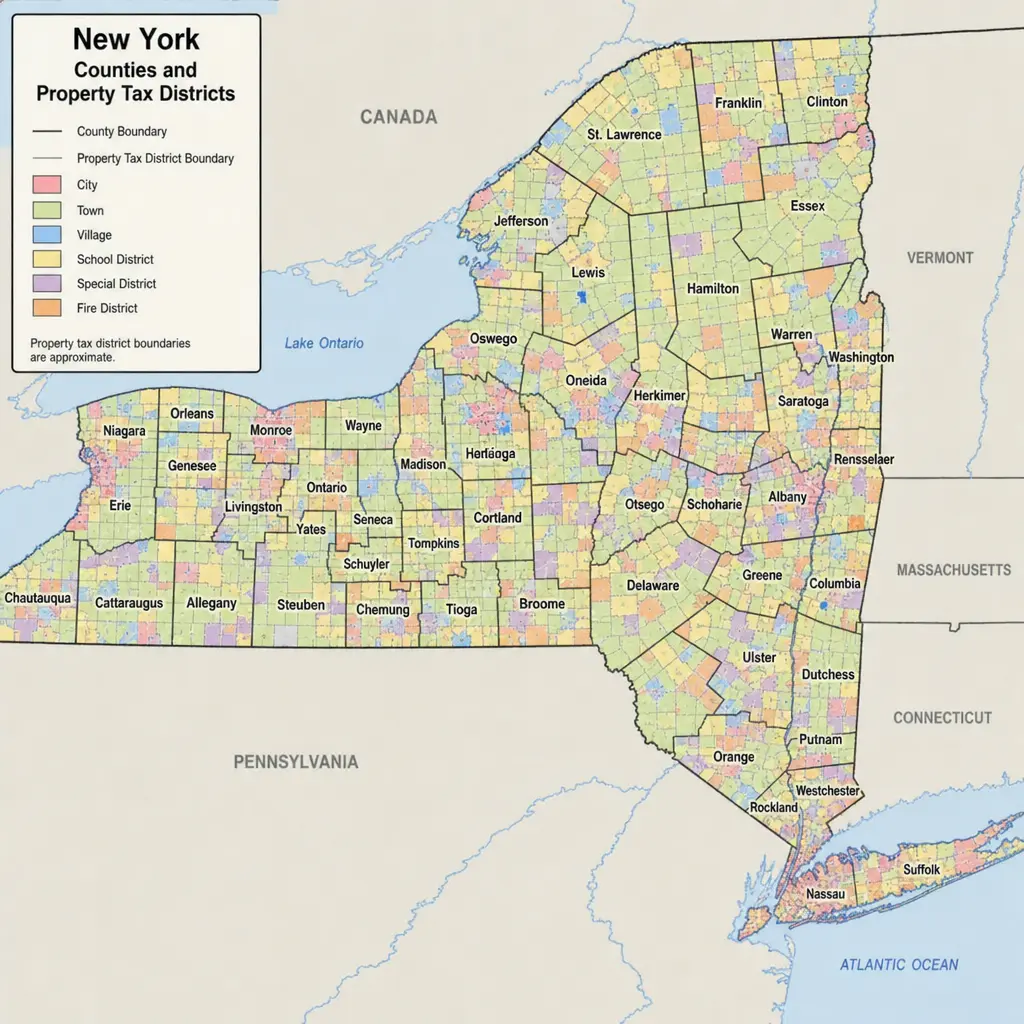
New York Property Tax Rates by County and ZIP Code
New York property taxes are local charges based on a property’s taxable assessment, the budgets of the jurisdictions that serve it, and the tax rates adopted for those jurisdictions.
· 9 min read
Montana Property Tax Rates: County & ZIP Guide
Montana property taxes can feel confusing because there is no single statewide bill that applies the same way to every home, ranch, commercial building, or vacant lot.
· 10 min read