
New York Property Tax Rates by County and ZIP Code
Discover how New York property tax rates by county and ZIP code differ, including NYC's unique system. Learn what affects your bill with our in-depth guide.
9 min read1,885 wordsZip Cost Ledger editorial
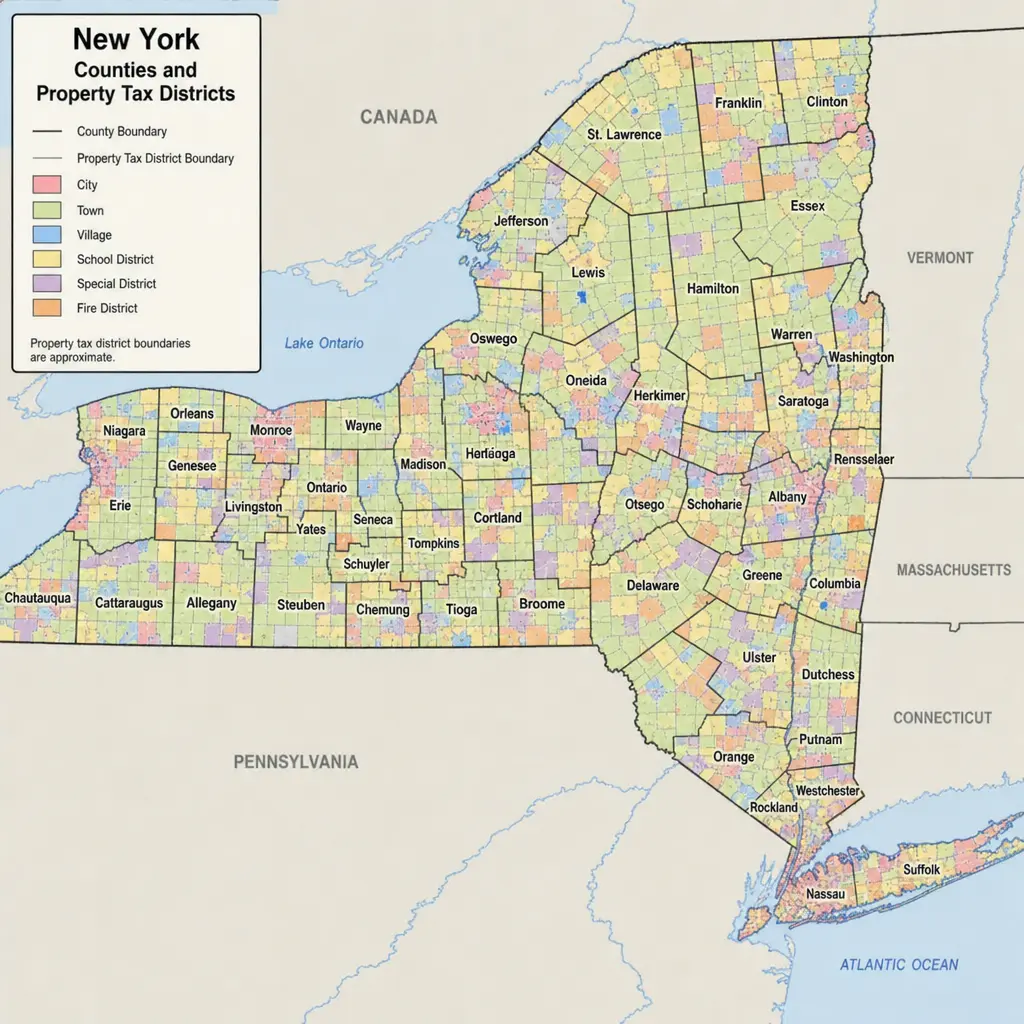
New York property taxes are local charges based on a property’s taxable assessment, the budgets of the jurisdictions that serve it, and the tax rates adopted for those jurisdictions. That means there is no single New York property tax rate that applies everywhere, and even neighboring homes can have different bills if they sit in different school districts, villages, exemptions, or tax classes. This guide explains how rates work, how New York City differs from the rest of the state, and how to approach a new york real estate tax lookup without getting misled by a headline percentage.
Why do New York property tax rates vary so much?
New York property tax rates vary because property tax is raised and spent locally, not as a single statewide real estate tax. Counties, cities, towns, villages, school districts, and special districts can all affect the amount due, and each jurisdiction’s budget, other revenue, levy, and taxable assessed value influence the rate. New York State’s Tax Department explains the basic formula as taxes owed equals taxable assessment multiplied by the property tax rate per thousand, while also noting that tax bills can change each year as budgets, revenues, levies, assessments, and exemptions change. (tax.ny.gov)
That local structure is why homeowners often search for New York property tax rates by county and ZIP code. County and ZIP code can be helpful starting points, but they do not tell the whole story. A ZIP code may cross municipal or school district lines, and a county contains multiple assessing units and tax jurisdictions. The practical question is not only “What county am I in?” but “Which tax districts apply to this parcel?”
The basic pieces of a property tax bill
A property tax bill starts with value, but it does not always start with the price you paid for the property. In New York, real property includes land and permanent structures, and local assessors estimate market value for properties in their communities. Personal property, such as cars or jewelry, is not subject to New York real property tax. (tax.ny.gov)
From there, the bill usually depends on several moving parts:
- Market value: An estimate of what the property would sell for under normal conditions.
- Assessed value: The value placed on the property for assessment purposes, which may be a percentage of market value.
- Exemptions: Reductions that may lower taxable assessment if the owner or property qualifies.
- Taxable assessment: The amount left after applicable exemptions.
- Tax rate: The rate adopted by the local taxing jurisdiction, often expressed per $1,000 of assessed or full value outside NYC.
- Taxing jurisdictions: The county, municipality, school district, village, or special district connected to the property.
This is also why a ny real estate tax rate can look high or low depending on what it is being applied to. A rate applied to assessed value is not the same as an effective tax rate applied to a home’s market value. When comparing properties, make sure you are comparing the same type of rate, the same year, and the same taxable base.
New York City uses tax classes, not county-style rates
New York City is different from most of the state because the nyc property tax rate is based on tax class. The Department of Finance lists four property tax classes, and the rate applied to a property depends on its classification. For tax year 2026, the published NYC rates are 19.843% for Class 1, 12.439% for Class 2, 11.108% for Class 3, and 10.848% for Class 4. (home4.nyc.gov)
Those percentages can surprise buyers because they apply to taxable assessed value, not directly to the purchase price or estimated market value. NYC’s annual tax calculation involves determining market value, applying the assessment level for the tax class, accounting for caps or phase-ins where relevant, subtracting exemptions or abatements, and then multiplying taxable value by the class rate. The Department of Finance notes that Class 1 properties use a 6% assessment level, while the other classes use 45%. (nyc.gov)
For practical purposes, the ny city property tax rate question should start with the property class:
- Class 1: Most one-, two-, and three-family homes.
- Class 2: Most other residential property, including many co-ops, condos, and rental buildings.
- Class 3: Utility property.
- Class 4: Commercial and industrial property.
That classification matters as much as location. Two homes in the same borough may have different tax treatment if one is a small one-family house and the other is a condo in a larger building.
How are rates set outside New York City?
Outside NYC, tax rates are generally set by local jurisdictions after they determine how much money must be raised through the property tax levy. The taxing jurisdiction adopts a budget, subtracts revenue from non-property-tax sources, and uses the remaining amount as the levy to be raised from property owners. The rate is then calculated by dividing that levy by the taxable assessed value in the jurisdiction and, commonly, expressing the result per $1,000 of value. (tax.ny.gov)
This explains why the same home value can produce very different bills in different places. A municipality with a larger tax base, different school spending, or more revenue from other sources may have a different rate than a nearby area. It also explains why a lower rate does not always mean lower taxes; if assessments are higher or exemptions differ, the final bill may still be larger.
When reviewing New York property tax rates by county and ZIP code, treat the rate as a clue rather than a conclusion. You still need the parcel’s assessment, exemptions, school district, village status, and applicable special district charges to estimate the bill accurately.
County, ZIP code, and school district comparisons need context
County-level comparisons are useful for broad research, especially if you are evaluating where to buy. They can show that property tax structures differ widely across the state and help you identify areas that need closer review. But county averages blur local differences, and ZIP code searches can be even less precise because ZIP codes were designed for mail delivery, not tax administration.
A better comparison process looks like this:
- Identify the parcel, not just the ZIP code. Use the property address or tax parcel ID whenever possible.
- Confirm the municipality and school district. School taxes are often a major part of the bill outside NYC.
- Check whether the property is inside a village. Village location can affect municipal rates and services.
- Review the assessment and exemptions. A similar home with a different exemption profile may have a different tax bill.
- Compare actual tax bills when possible. Bills show the combined result of rates, values, exemptions, and charges.
New York’s open data resources can help with the research. The state’s real property tax rates and levy data set provides rates and levies for taxing jurisdictions, including county, municipal, and school tax purposes, and the Tax Department’s Municipal Data Portal offers local real property assessment information by county or municipality. (catalog.data.gov)
What is the easiest way to look up New York real estate taxes?
The easiest way to look up New York real estate taxes is to start with the official source for the property’s location: NYC Department of Finance for New York City properties, or the relevant county, city, town, or municipal assessor and tax receiver outside NYC. A statewide data portal can help you understand rates and assessment context, but the parcel-level bill or assessment record is usually the most useful document for a specific property. (tax.ny.gov)
For a new york real estate tax lookup, gather a few details before you search:
- Property address.
- Borough, county, city, town, or village.
- Tax map number, block and lot, or parcel ID if available.
- Owner name, if the lookup tool allows owner searches.
- School district, especially outside NYC.
- Most recent tax bill or assessment notice, if you have it.
In New York City, the Department of Finance calculates bills based on property value and the tax rate for the property’s tax class, and property tax bill information can be viewed online through the city’s systems. (portal.311.nyc.gov) Outside the city, the official lookup path varies by county and municipality, so the best source may be a county real property tax office, town assessor, school tax collector, or municipal payment portal.
NYC property taxes and broader city and state taxes are separate
Searches for ny city and state tax rates often mix together different taxes: property tax, income tax, sales tax, transfer taxes, and mortgage recording taxes. Those are separate systems. New York city real estate taxes are tied to the parcel and property tax class, while state and city income taxes are tied to income and residency rules, and transaction taxes are tied to a sale or financing event.
For homeowners and buyers, keeping these categories separate prevents bad estimates. A monthly housing budget should consider the property tax bill, insurance, common charges or maintenance, mortgage costs, utilities, and any transaction-related costs if buying. For investors, the property tax line should be reviewed alongside operating expenses and projected income, not treated as a simple percentage copied from another building.
Common mistakes when reading New York property tax rates
The biggest mistake is assuming one published rate explains the whole bill. In NYC, the rate is only one step in a class-based calculation. Outside NYC, a county rate may not include the school district, village, or special district amounts that appear on the final bill.
Other common errors include:
- Using market value instead of taxable assessed value. The tax rate may apply to a different base than the sale price.
- Comparing different tax years. Rates, assessments, exemptions, and levies can change annually.
- Ignoring exemptions and abatements. These can materially affect the taxable amount for eligible owners.
- Relying only on ZIP code averages. ZIP codes may include multiple jurisdictions.
- Assuming a seller’s bill will stay the same. Reassessments, exemption changes, renovations, or local budget changes can affect future bills.
If a number seems unusually low, ask why. It may reflect a long-held exemption, a transitional assessed value, a partial-year bill, or a property class difference. If a number seems unusually high, review the assessment, classification, and tax districts before concluding the rate is wrong.
A practical checklist for buyers and owners
Whether you are buying, refinancing, grieving an assessment, or budgeting for ownership, use a repeatable process rather than a quick search result.
- Find the most recent tax bill from the official local source.
- Confirm the tax year and due dates.
- Check the property class or assessing unit.
- Review assessed value, taxable value, exemptions, and abatements.
- Identify every tax jurisdiction on the bill.
- Compare similar properties in the same municipality and school district, not just the same ZIP code.
- Watch for reassessment notices, renovation changes, or exemption expirations.
- If the assessment appears inaccurate, review the local challenge or grievance process before the deadline.
The key takeaway
Understanding New York property taxes means looking beyond a single rate. The new york property tax rate depends on local budgets, assessments, exemptions, tax districts, and, in NYC, tax class. Use county and ZIP code research as a starting point, then verify the parcel-level record through official sources so your estimate reflects the property you actually own or plan to buy.
Related guides
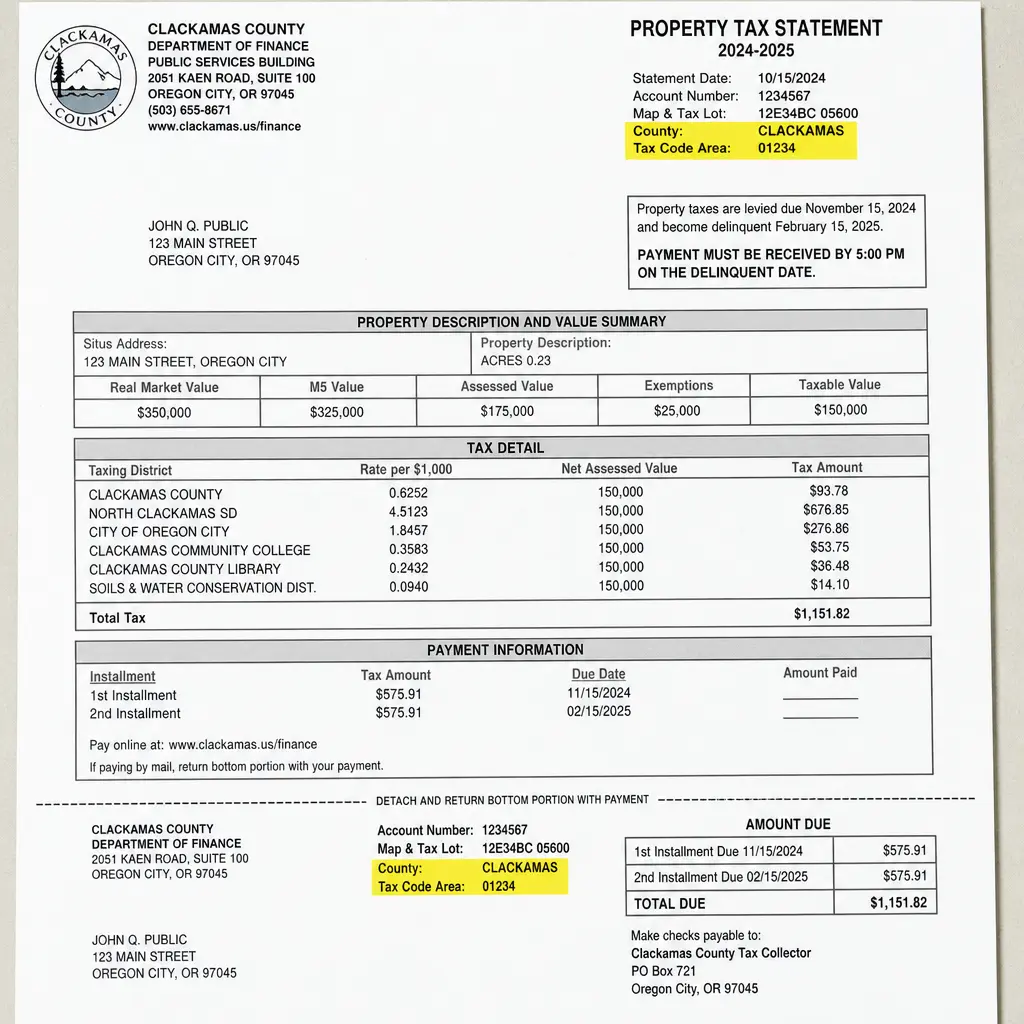
Oregon Property Tax Rates by County & ZIP Code Guide
Oregon property taxes can feel confusing because there is no single statewide rate that applies to every home.
· 8 min read
Montana Property Tax Rates: County & ZIP Guide
Montana property taxes can feel confusing because there is no single statewide bill that applies the same way to every home, ranch, commercial building, or vacant lot.
· 10 min read
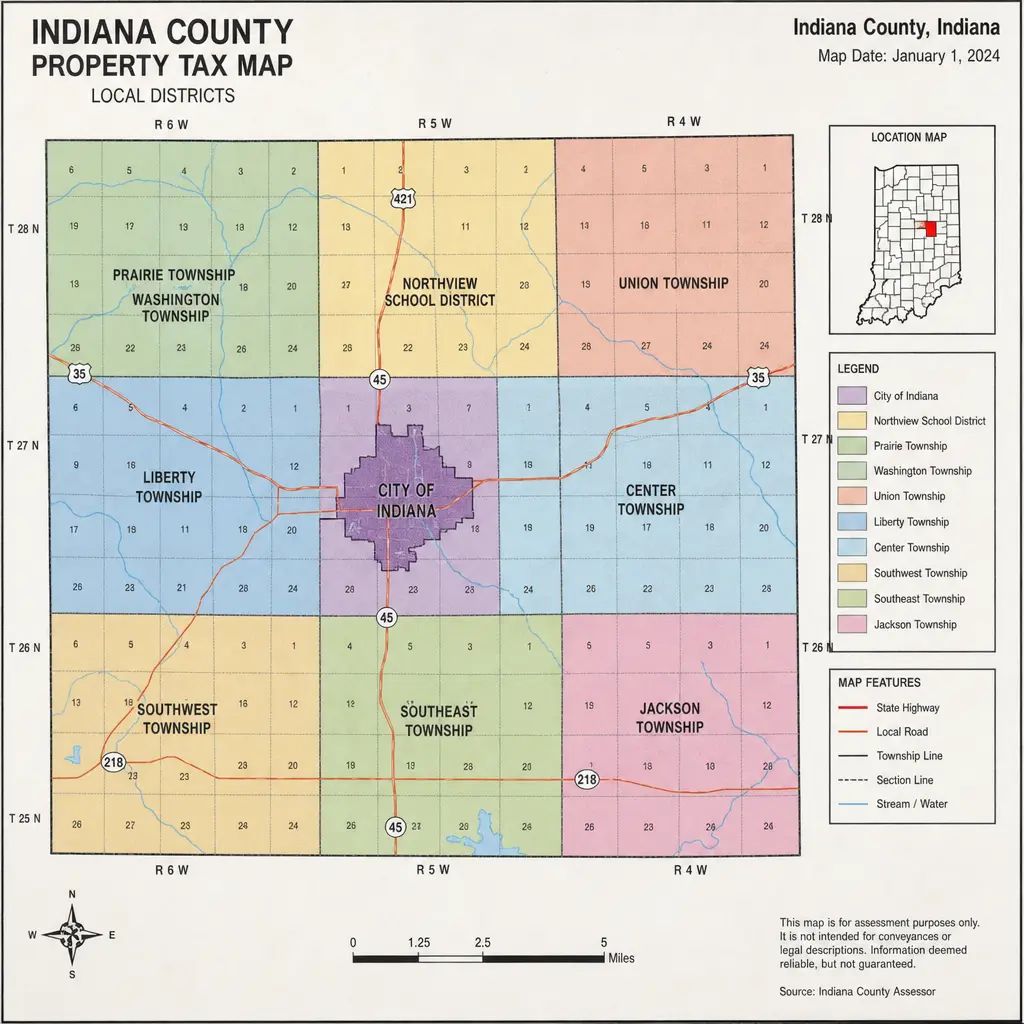
Indiana Property Tax: County & ZIP Rate Guide
Indiana real estate taxes are local taxes, so the rate you pay depends on your county, taxing district, property type, deductions, and voter-approved charges.
· 9 min read