
Montana Property Tax Rates: County & ZIP Guide
Montana property tax by county and ZIP code: how market value, classification and local levies set the bill, and how to look yours up.
10 min read1,946 wordsZip Cost Ledger editorial
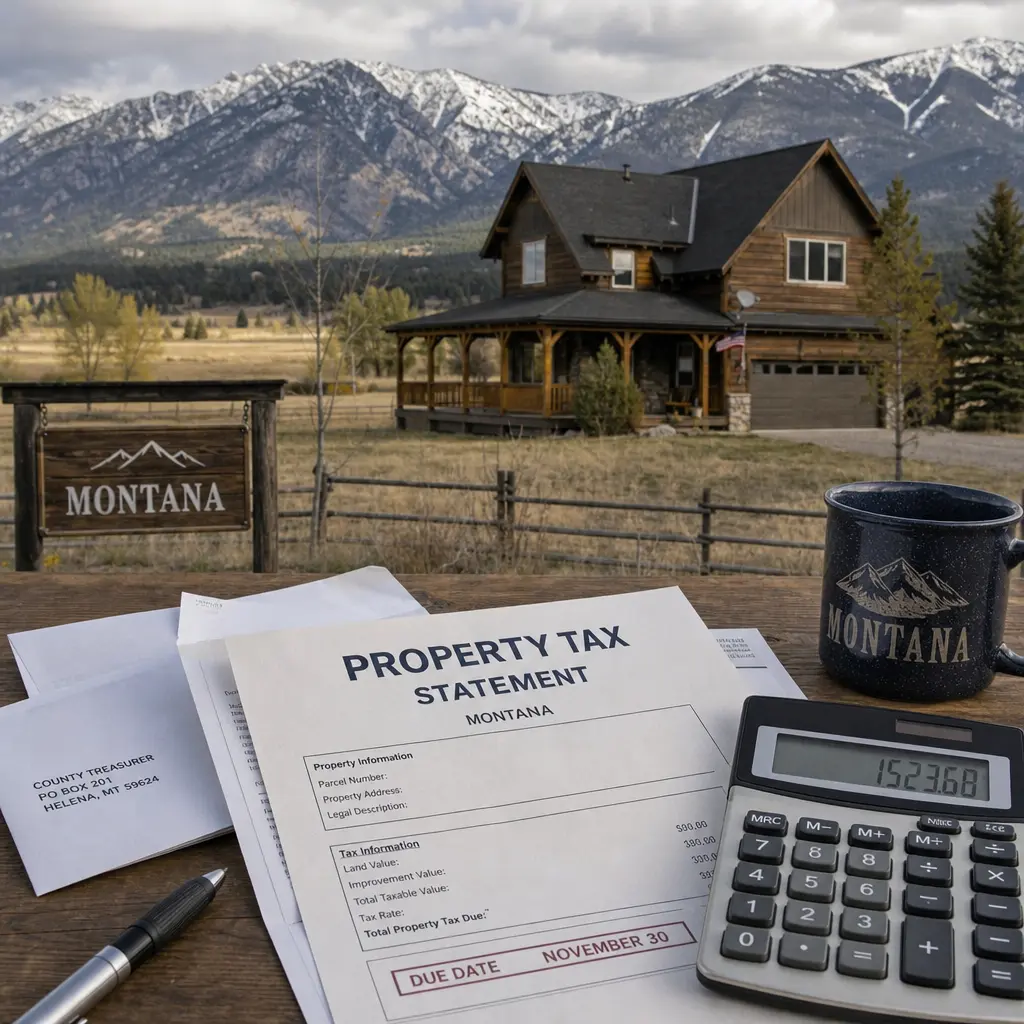
Montana property taxes can feel confusing because there is no single statewide bill that applies the same way to every home, ranch, commercial building, or vacant lot. Your final amount depends on your property’s market value, its tax classification, the applicable tax rate, and the local mills set by schools, counties, cities, and special districts. This guide explains how Montana tax rates work, how to use a Montana property tax lookup, and why Montana property tax rates by county and ZIP code should be treated as a starting point rather than a final answer.
What is the property tax in Montana?
The property tax in Montana is a local tax based on the taxable value of real property, with the Montana Department of Revenue handling property valuation and classification and local taxing jurisdictions applying mills to help fund public services. The department values taxable property at 100% of market value, while counties, school districts, cities, towns, and other districts use mill levies to calculate what each owner owes. (revenue.mt.gov)
That means the phrase “Montana property tax rates” can refer to more than one thing. It may describe the state tax rate assigned to a class of property, the county tax rates shown on a bill, or the combined mill levy for the exact levy district where the property sits. For homeowners, buyers, and investors, the most useful number is usually the final tax bill or an estimate based on the specific parcel.
The core pieces of a Montana property tax bill
A Montana tax bill is easier to understand when you break it into parts. The market value alone does not tell you the bill, and neither does the county name alone. The calculation flows through a few layers before the county treasurer sends the final bill.
Key pieces include:
- Market value: The Department of Revenue’s estimate of the property’s full market value. For residential, commercial, and industrial real property, appraisal notices for the 2025-2026 cycle reflect the department’s determination of 100% market value as of January 1, 2024. (revenuefiles.mt.gov)
- Property classification: Montana uses property classes based on property use. Residential, commercial, and industrial land and improvements are generally Class 4, while agricultural land, forest land, utilities, business equipment, and other property types have their own classes. (revenue.mt.gov)
- Taxable value: This is the portion of value that is subject to mills after the class rate is applied.
- Mill levy: A mill is a tax rate used by local jurisdictions. A combined mill levy reflects the mills from all taxing entities that apply to that parcel.
- Special assessments and fees: Some bills include charges that are not captured by a simple tax-rate estimate. The Montana Department of Revenue advises property owners to contact the county treasurer for details on special assessments or fees. (revenue.mt.gov)
Montana property tax rates vary by property type
Montana property taxes are not based only on where a property is located. They are also shaped by what the property is and how it is used. A primary residence, long-term rental, second home, commercial building, agricultural parcel, or industrial property may be treated differently under state classification rules.
For 2026, Montana implemented a property tax structure that distinguishes primary residences and long-term rentals from second homes, short-term vacation properties, and certain other property types. The Department of Revenue describes reduced, tiered rates for qualifying primary residences and long-term rentals, including 0.76% on the first $378,000 of market value, 0.90% on the portion from $378,001 to $756,000, 1.10% on the portion from $756,001 to $1,511,999, and 1.90% on the portion at $1,512,000 or more. (revenue.mt.gov)
The same Department of Revenue guidance says non-primary residences and non-long-term rentals, including second homes, short-term rentals, and vacant residential lots, are subject to a flat 1.90% rate. Multifamily dwellings used as long-term rentals are listed at a flat 1.10% rate. (revenue.mt.gov)
These percentages are important, but they are not the final bill. They help determine taxable value before local mills and other charges are applied. A property in one levy district may owe a different amount than a similar property in another district because local services and voter-approved levies differ.
Why county tax rates do not tell the whole story
Searching for property tax by county is useful, but it can also be misleading if you expect one countywide number to answer everything. County tax rates often include several overlapping jurisdictions. Two properties in the same county may be in different school districts, fire districts, city limits, or special improvement districts.
This is why Montana property tax rates by county and ZIP code should be used carefully. ZIP codes are built for mail delivery, not tax administration. A ZIP code may cross county lines, city boundaries, or school district boundaries, while a tax levy district follows governmental and service-area boundaries.
When comparing Montana real estate taxes, look beyond the county name and ask:
- Is the property inside city limits or in an unincorporated area?
- Which school district applies?
- Are there rural fire, water, lighting, road, or special improvement districts?
- Does the property qualify as a primary residence or long-term rental?
- Are there special assessments, fees, or abatements on the bill?
- Is the value from the current appraisal cycle or an older estimate?
For a quick market comparison, county-level numbers can help you spot broad differences. For a purchase decision, budget, or appeal review, parcel-level information is much safer.
How do you use a Montana property tax lookup?
To use a Montana property tax lookup, start with the state’s property search or your county’s online property tax lookup, then search by address, owner name, assessment code, geocode, or property number when available. The Montana Department of Revenue’s Property Search site allows users to look up property information by address, assessment code, name, or property number, and it recommends selecting a county or field type to improve search speed. (svc.mt.gov)
A county lookup is often the best place to confirm actual taxes billed and paid. The Department of Revenue also maintains a county property tax lookup resource with direct links for Montana counties that offer online services, and it notes that users can search county systems by name, geocode, or address where available. (revenue.mt.gov)
A practical lookup process looks like this:
- Find the parcel. Use the exact street address if possible. If that fails, try the owner name, geocode, assessment code, or property number.
- Confirm the county and levy district. Do not rely only on the ZIP code. Check the jurisdiction details tied to the parcel.
- Review market and taxable values. Compare the current assessed value, classification, and taxable value shown for the property.
- Check the tax bill. Look for the total tax, installments, special assessments, and payment status.
- Save the details. If you are buying, refinancing, appealing, or estimating cash flow, keep a copy of the current bill and assessment record.
County and ZIP code comparisons are best used as estimates
Many homeowners and buyers search for Montana property tax rates by county and ZIP code because they want a quick answer before making a decision. That makes sense. Taxes can affect affordability, rental returns, escrow payments, and the true cost of owning real estate.
Still, county and ZIP code comparisons work best as rough estimates. They can show that one area tends to have higher or lower tax burdens, but they cannot reliably predict the bill for a specific parcel without the property’s classification, taxable value, levy district, and assessments.
For example, a home just outside city limits may have a different tax profile than a similar home a few streets away inside a municipality. A long-term rental may be treated differently from a short-term rental. A property with a special district charge may show a higher bill than a neighbor with the same basic value.
Common reasons Montana property taxes change
Montana property taxes can move up or down even when the owner has not made obvious changes to the property. Some changes come from valuation, while others come from local budgets, voter-approved levies, or property-use rules.
Common reasons include:
- Reappraisal changes: If market values rise or fall during a reappraisal cycle, taxable value may change.
- Classification changes: A shift from primary residence to second home, long-term rental to short-term rental, or agricultural to residential use can affect the applicable rate.
- Local mill changes: Schools, counties, towns, and districts may have different funding needs or approved levies from year to year.
- New improvements: Additions, remodels, outbuildings, or new construction can increase value.
- Boundary or district changes: Annexation or district changes may add or remove local mills.
- Special assessments: Local charges for improvements or services may appear separately from the main property tax calculation.
Understanding the reason for a change matters. If the issue is valuation, the appraisal notice and appeal process may be relevant. If the issue is a mill levy or special assessment, the county treasurer or local taxing authority may be the better contact.
What should buyers know about Montana real estate taxes?
Buyers should review Montana real estate taxes at the parcel level before making an offer, because the seller’s current bill may not match the buyer’s future bill. A property’s value, use, exemptions, special assessments, and classification can all affect what the next owner pays.
When reviewing a listing, do not stop at the tax amount shown in marketing materials. Ask for the most recent tax bill and verify it through the county or state lookup. If the property is advertised as a rental, second home, cabin, agricultural tract, or mixed-use property, pay special attention to classification.
A smart buyer checklist includes:
- Pull the parcel record through a Montana property tax lookup.
- Confirm the current owner’s tax bill with the county treasurer.
- Ask whether the property has special assessments or unpaid taxes.
- Compare the listed use with the tax classification.
- Estimate taxes based on your intended use, not only the seller’s use.
- Speak with a local tax professional, county office, or real estate advisor if the property is unusual.
A practical way to estimate Montana property taxes
You can make a rough estimate by starting with the property’s market value, applying the likely classification rate, then using the local mill levy and adding known assessments. However, because local levies and special charges vary, the most reliable estimate comes from an actual parcel record and county bill.
Use this simple framework:
- Identify the property type and intended use.
- Confirm whether it may qualify as a primary residence, long-term rental, non-primary residence, commercial property, agricultural land, or another class.
- Look up the current market value and taxable value.
- Find the combined mills for the property’s levy district.
- Review the county tax bill for assessments, fees, and payment history.
- Adjust expectations if the purchase price, use, or ownership status will differ from the current record.
This approach keeps you from relying on averages that may not apply to the property you actually care about.
The bottom line on Montana tax rates
Montana property taxes are local, layered, and property-specific. State classification rules help determine taxable value, but county tax rates, school mills, city services, special districts, and assessments shape the final bill. If you are asking “what is the property tax in Montana,” the most accurate answer is found through a parcel-level lookup, not a statewide average.
Use county and ZIP code research to understand the landscape, then verify the individual property through official state and county tools. Whether you own a home, compare counties, evaluate rentals, or budget for a move, that extra step gives you a clearer view of the real cost of Montana property ownership.
Related guides
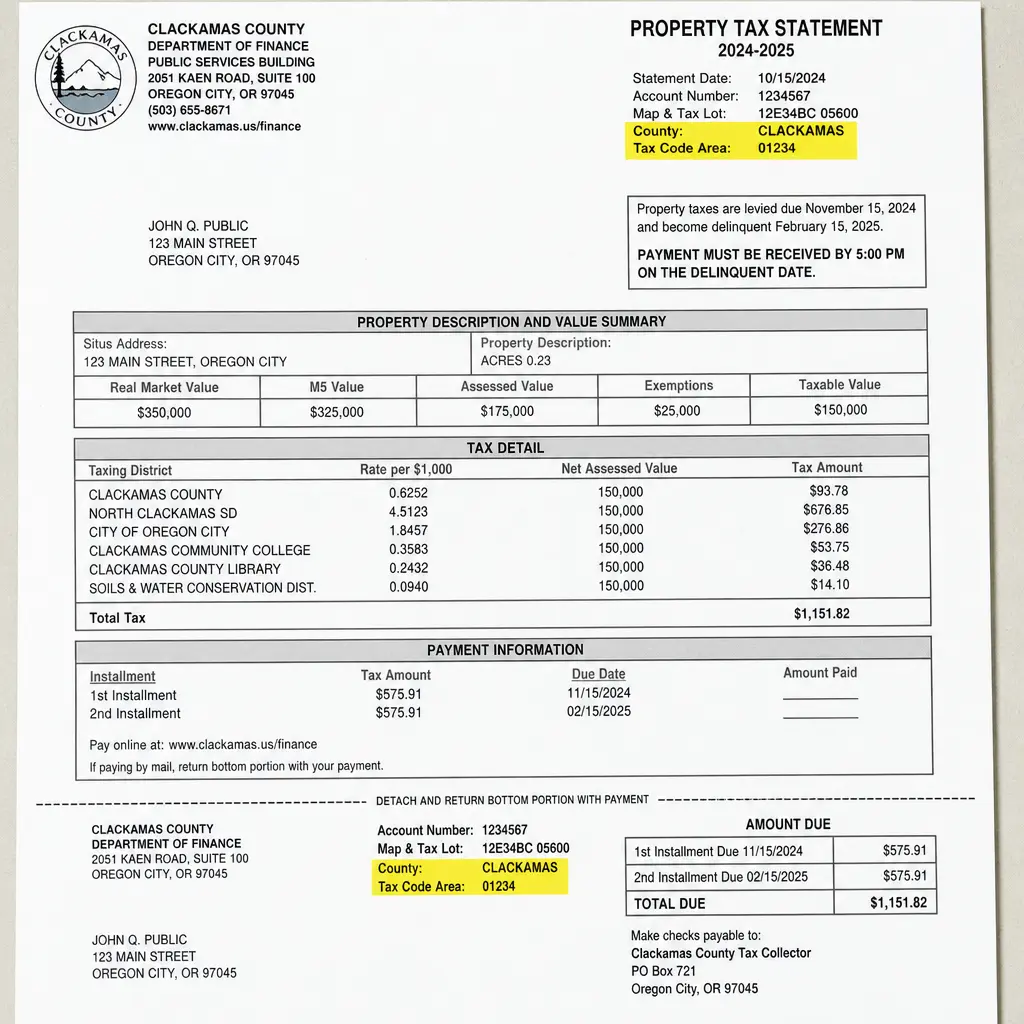
Oregon Property Tax Rates by County & ZIP Code Guide
Oregon property taxes can feel confusing because there is no single statewide rate that applies to every home.
· 8 min read
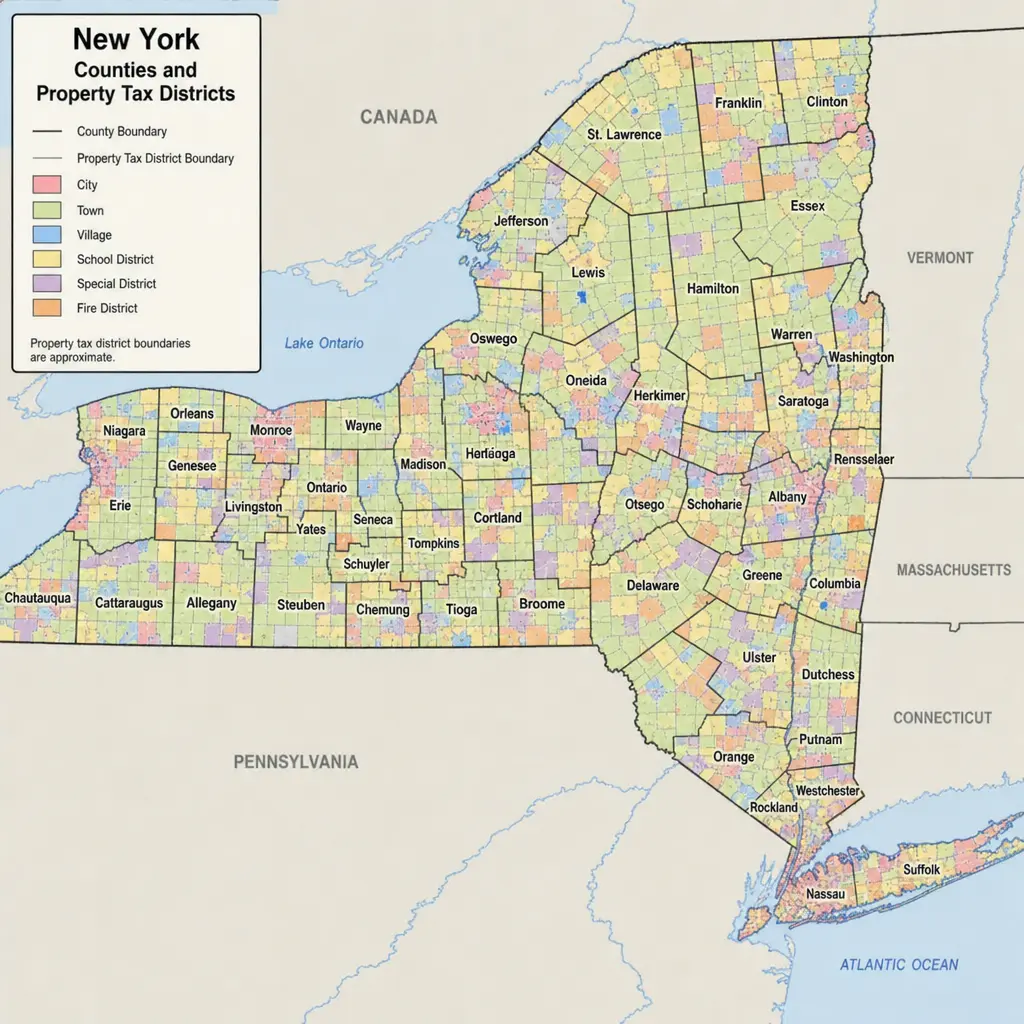
New York Property Tax Rates by County and ZIP Code
New York property taxes are local charges based on a property’s taxable assessment, the budgets of the jurisdictions that serve it, and the tax rates adopted for those jurisdictions.
· 9 min read
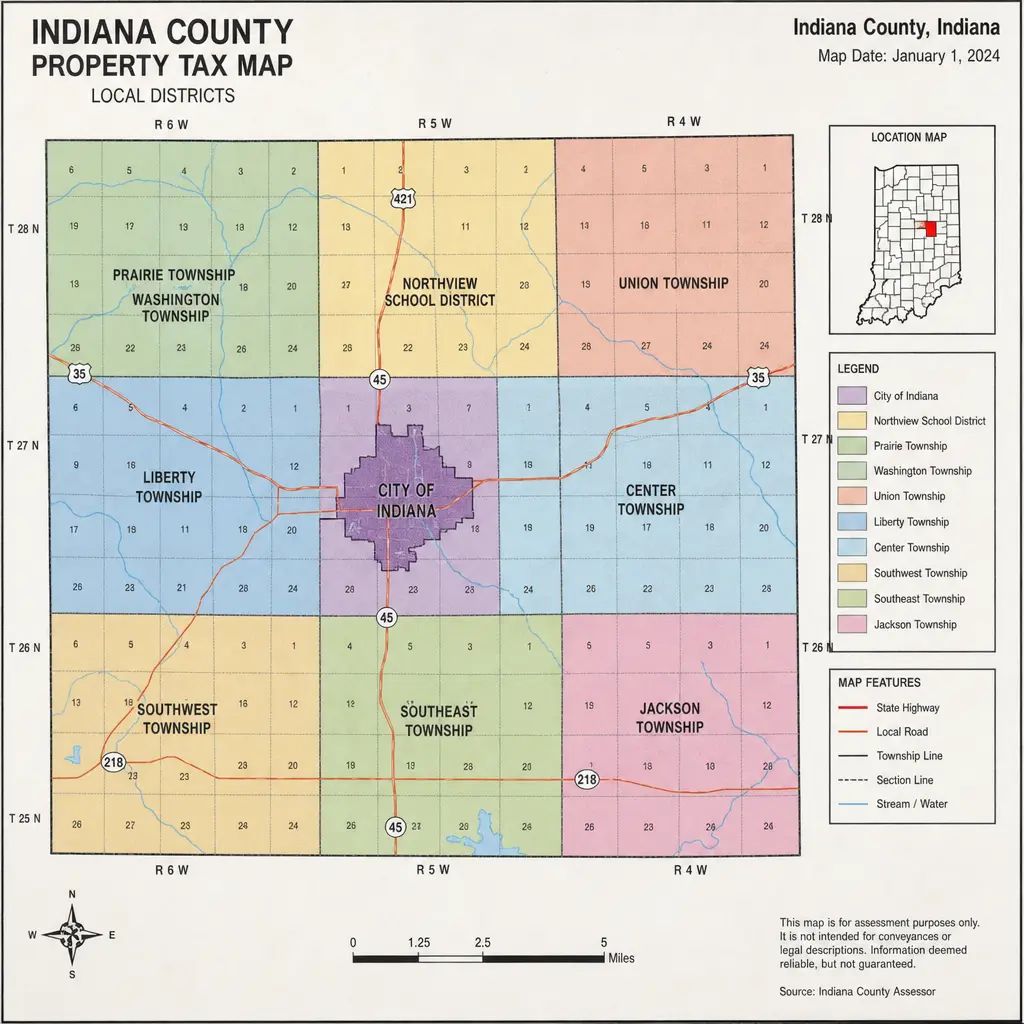
Indiana Property Tax: County & ZIP Rate Guide
Indiana real estate taxes are local taxes, so the rate you pay depends on your county, taxing district, property type, deductions, and voter-approved charges.
· 9 min read