
Hawaii Property Tax Rates by County and ZIP Code
Discover detailed Hawaii property tax rates by county and ZIP code. Learn how variations in Oahu, Maui, Kauai, and Big Island impact your bill.
6 min read1,298 wordsZip Cost Ledger editorial
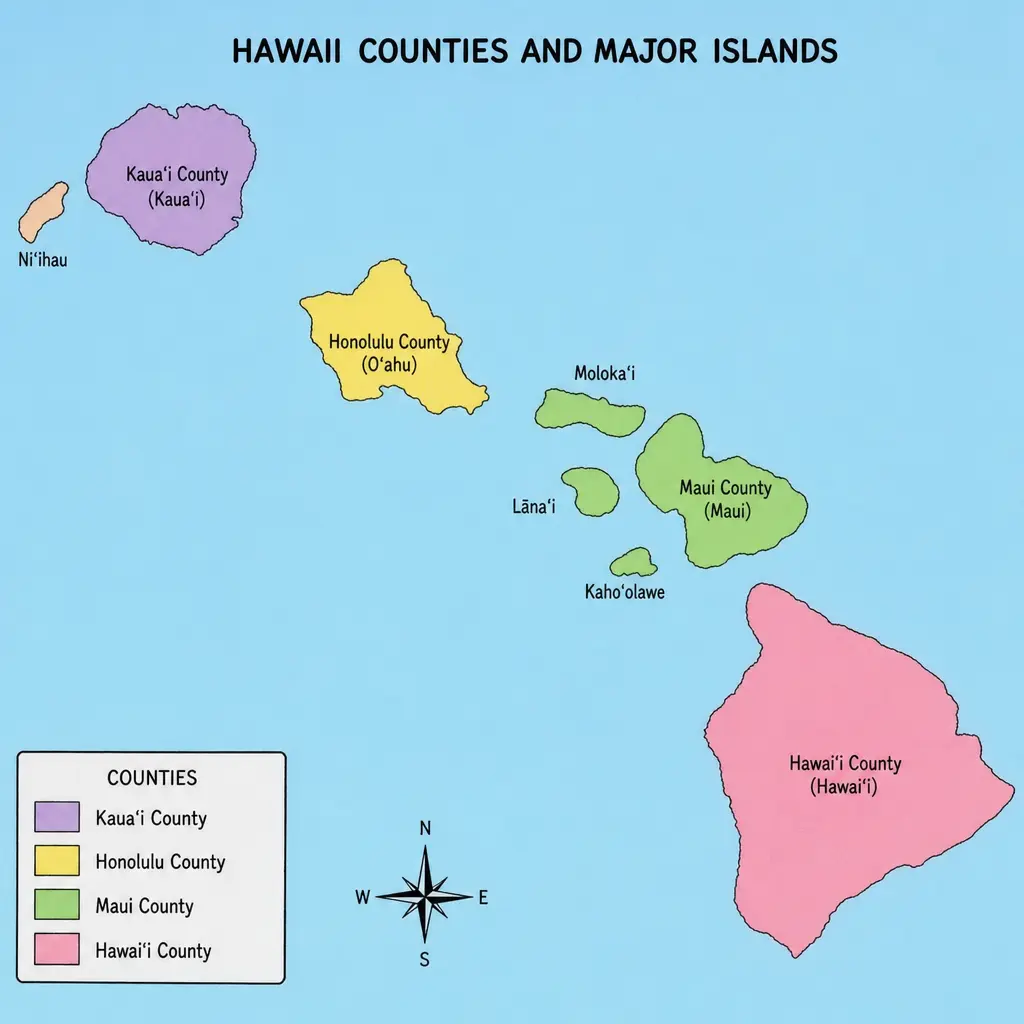
Hawaii property taxes are local, not statewide, so the county where a property sits matters just as much as the property’s value or use. This guide explains how Hawaii real property tax rates work, why Oahu property tax can look very different from Maui or Big Island tax, and how to read Hawaii property tax rates by county and ZIP code without getting tripped up by classifications, exemptions, or tiered rates.
Are Hawaii property tax rates set by the state or by county?
Hawaii real property tax is set and administered by the counties, not through one uniform Hawaii state property tax rate. For the tax year running July 1, 2026, through June 30, 2027, the official statewide rate report lists separate schedules for Honolulu, Maui, Kauai, and Hawaii County, with rates expressed per $1,000 of net taxable value. (realproperty.honolulu.gov)
That distinction matters. A property owner searching for “hawaii state property tax” may expect a single state rate, but Hawaii’s system is more localized. The state does have income tax, and the Hawaii state income tax rate is a separate issue from real property tax; Hawaii’s individual income tax tables for taxable years after December 31, 2024, use marginal brackets that range from 1.4% to 11%. (tax.hawaii.gov)
The basic formula behind Hawaii real estate tax
The basic calculation is straightforward: divide the net taxable value by 1,000, then multiply by the applicable county rate. “Net taxable value” generally reflects assessed value after any applicable exemptions, so two similar homes can have different bills if one qualifies for a homeowner, owner-occupied, long-term rental, or other beneficial classification.
Use this simple checklist when estimating a Hawaii real estate tax bill:
- Identify the county. Honolulu covers Oahu, Maui County includes Maui, Molokai, and Lanai, Hawaii County covers the Big Island, and Kauai County covers Kauai.
- Confirm the property class. Residential, owner-occupied, non-owner-occupied, hotel/resort, agricultural, vacation rental, and long-term rental categories can carry very different rates.
- Check whether tiers apply. Some counties tax different value bands at different rates.
- Subtract approved exemptions. Homeowner or owner-occupied exemptions may reduce taxable value or change classification.
- Apply the rate per $1,000. A $3.50 rate means $3.50 for each $1,000 of net taxable value, not 3.5%.
Honolulu and Oahu property tax rates
Honolulu real property tax applies to Oahu, so searches for Honolulu property tax and Oahu property tax are usually pointing to the same county tax system. For the 2026–2027 tax year, Honolulu’s standard Residential rate is $3.50 per $1,000 of net taxable value, while Residential A is tiered at $4.00 on the first $1,000,000 and $11.40 on value above $1,000,000. (realproperty.honolulu.gov)
Honolulu also has higher rates for many income-producing or visitor-related uses. Commercial and Industrial properties are listed at $12.40, Hotel and Resort at $13.90, Bed and Breakfast Home at $6.50, and Transient Vacation properties at $9.00 on the first $800,000 and $11.50 above that amount. Agricultural and Preservation properties are listed at $5.70, while Vacant Agricultural is $8.50. (realproperty.honolulu.gov)
The practical takeaway is that classification can matter more than the island itself. A primary residence, a high-value second home, and a permitted transient vacation property on Oahu may all be “residential” in a casual conversation, but they may not be taxed the same way.
Maui County property tax rates
Maui County’s system is highly classification-driven and uses several tiered categories. For 2026–2027, owner-occupied properties are listed at $1.65 up to $1,500,000, $1.80 from $1,500,001 to $4,500,000, and $5.00 above $4,500,000. Non-owner-occupied property is listed at $6.25 up to $1,000,000, $9.00 from $1,000,001 to $2,500,000, and $17.00 above $2,500,000. (realproperty.honolulu.gov)
Long-term rental property receives its own tiers: $2.90 up to $1,500,000, $5.00 from $1,500,001 to $3,000,000, and $8.50 above $3,000,000. TVR-STRH property is higher, at $13.00 up to $900,000, $15.00 from $900,001 to $3,000,000, and $17.00 above $3,000,000. Other Maui County rates include Apartment at $3.50, Commercial at $6.05, Industrial at $7.05, Agricultural at $5.74, Conservation at $6.43, Hotel and Resort at $11.80, and Time Share at $14.90. (realproperty.honolulu.gov)
For buyers and investors, Maui’s rate structure rewards careful planning. A property used as a principal residence, a long-term rental, or a short-term vacation rental may face very different tax treatment even if the market value is similar.
Kauai County property tax rates
Kauai County uses a relatively simple owner-occupied rate plus tiered rates for non-owner-occupied residential and vacation rental property. For 2026–2027, Owner-Occupied property is listed at $2.59 per $1,000, while Non-Owner Occupied property is $5.45 up to $1,300,000, $6.05 from above $1,300,000 through $2,000,000, and $9.40 above $2,000,000. (realproperty.honolulu.gov)
Vacation Rental property on Kauai is listed at $11.30 up to $1,000,000, $11.75 from above $1,000,000 through $2,500,000, and $12.20 above $2,500,000. Other listed rates include Hotel and Resort at $11.75, Commercial and Industrial at $8.10, Agricultural and Conservation at $6.75, Owner-Occupied Mixed-Use at $5.05, and Long-Term Affordable Rental at $2.59. (realproperty.honolulu.gov)
Kauai’s structure makes the use of the property especially important. A full-time owner-occupied home, a second home, and a vacation rental can sit in the same ZIP code but fall into different tax categories.
Hawaii County property tax rates
Hawaii County, covering the Big Island, lists a Homeowner rate of $5.75 for 2026–2027. Standard Residential property is tiered at $11.10 up to $2,000,000, $14.50 above $2,000,000 through $4,000,000, and $17.00 above $4,000,000. (realproperty.honolulu.gov)
Other Hawaii County rates include Affordable Rental Housing at $5.75, Apartment at $11.70, Commercial and Industrial at $10.70, Agricultural at $9.35, Conservation at $11.55, Hotel/Resort at $11.55, and Long-Term Rental at $7.75. (realproperty.honolulu.gov)
The Big Island example shows why “Hawaii property tax rates by county and ZIP code” can be a useful search, but the county rate schedule is only the beginning. The same county can include homeowner, long-term rental, agricultural, resort, and high-value residential classifications with different results.
How do ZIP codes affect Hawaii property tax rates?
ZIP codes help you locate the property and identify the correct county, but they do not usually create the tax rate by themselves. The actual Hawaii real property tax rate comes from the county, the property’s classification, taxable value, and any applicable exemptions or tier thresholds.
That means a ZIP code search is best used as a starting point. Once you know the property is in Honolulu, Maui, Kauai, or Hawaii County, look up the parcel record, confirm the tax map key, and verify the classification shown by the county assessor. If a ZIP code covers a popular visitor area, do not assume every property in that ZIP is taxed as a vacation rental; the official classification is what matters.
Common reasons Hawaii property tax bills differ
Two neighboring properties can have very different tax bills. The difference often comes down to details that are easy to miss during a home search or investment analysis.
Key factors include:
- Owner occupancy: Counties often provide more favorable treatment for qualifying primary residences.
- Rental use: Long-term rental and short-term rental classifications may be taxed differently.
- Value tiers: Higher-value properties may have portions taxed at higher rates.
- Exemptions: Approved exemptions can reduce net taxable value or affect the applicable class.
- Property type: Agricultural, commercial, hotel/resort, industrial, and apartment uses have separate categories.
- Annual rate changes: County councils can change rates from one fiscal year to the next, so last year’s bill is not always a reliable estimate.
Final takeaway
Hawaii property tax is best understood county by county, not as one statewide number. Start with the county, confirm the classification, apply any exemptions, and then use the rate per $1,000 of net taxable value. If you are comparing Honolulu real property tax with Maui, Kauai, or Hawaii County, remember that the lowest-looking rate is not always the lowest bill; the final amount depends on value, use, exemptions, and the county’s current rate schedule.
Related guides
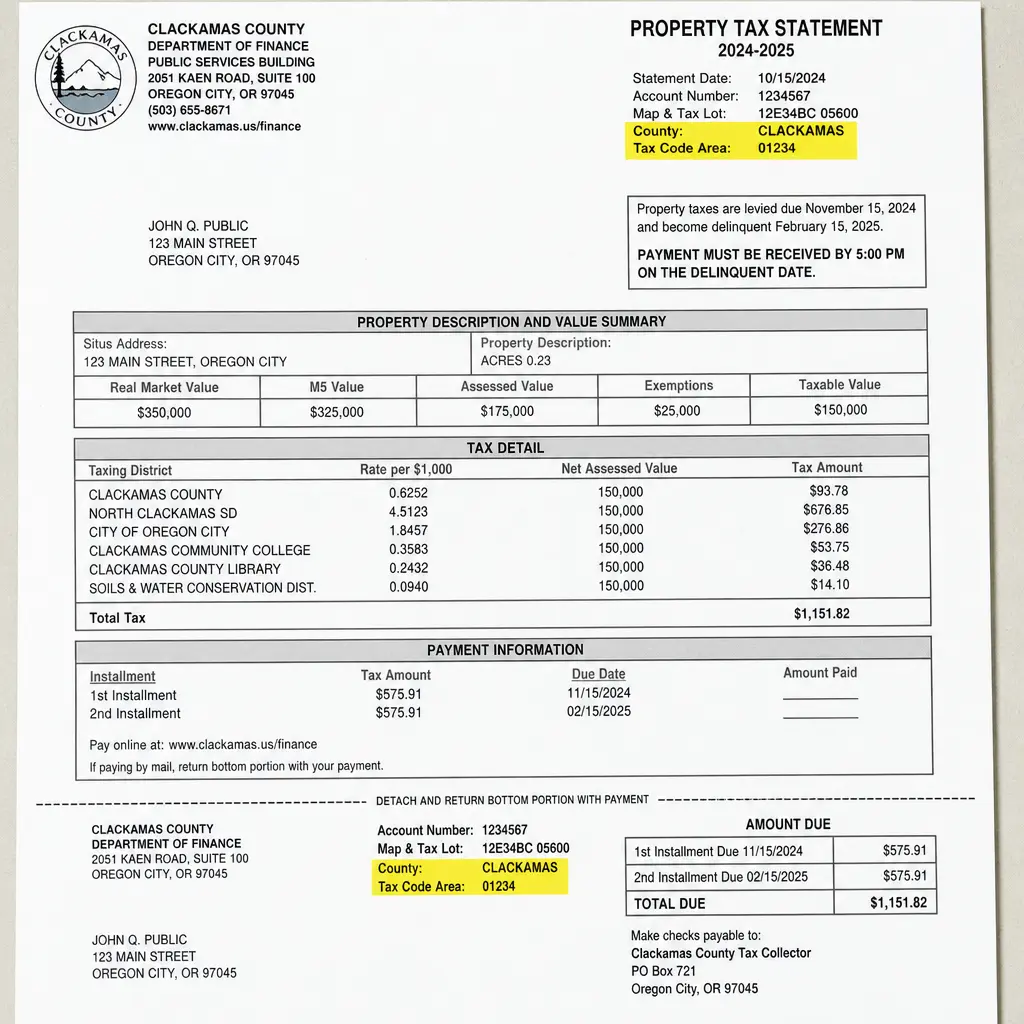
Oregon Property Tax Rates by County & ZIP Code Guide
Oregon property taxes can feel confusing because there is no single statewide rate that applies to every home.
· 8 min read
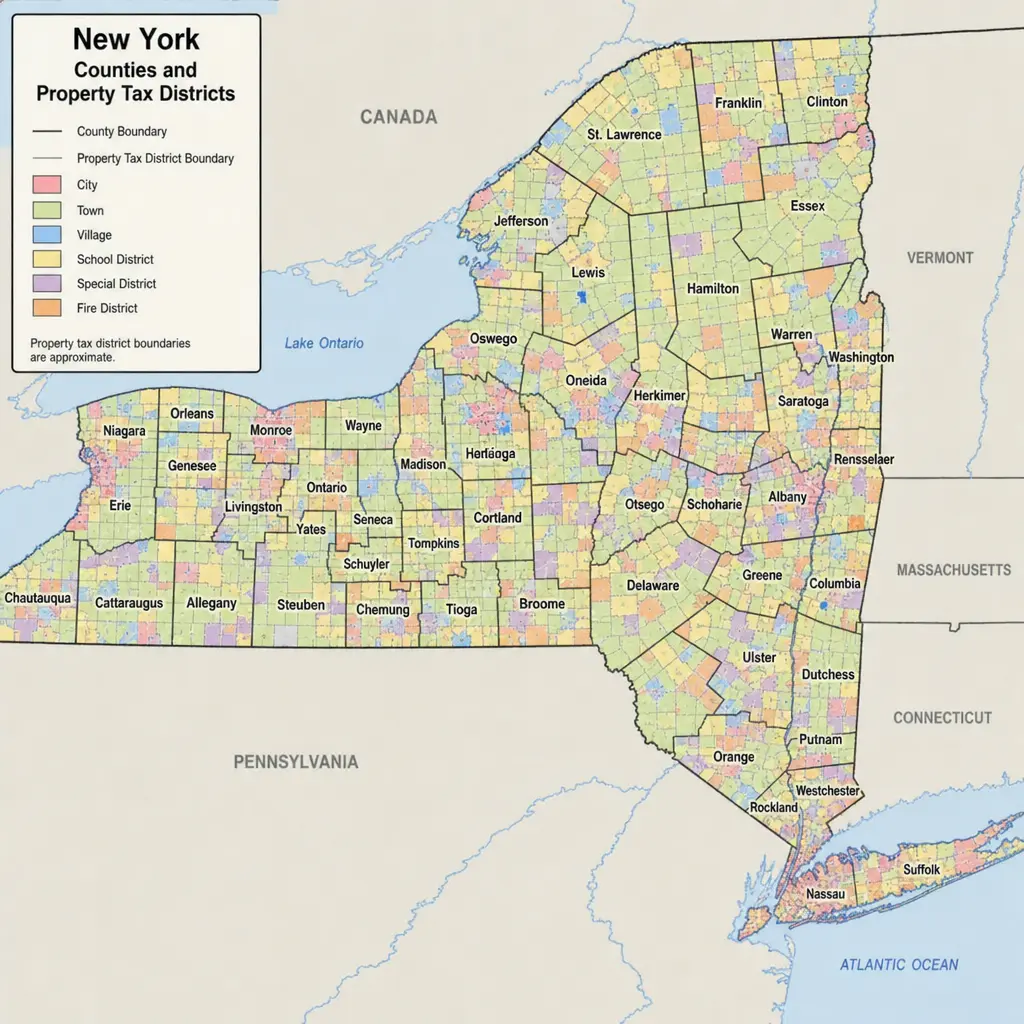
New York Property Tax Rates by County and ZIP Code
New York property taxes are local charges based on a property’s taxable assessment, the budgets of the jurisdictions that serve it, and the tax rates adopted for those jurisdictions.
· 9 min read
Montana Property Tax Rates: County & ZIP Guide
Montana property taxes can feel confusing because there is no single statewide bill that applies the same way to every home, ranch, commercial building, or vacant lot.
· 10 min read