
Kentucky State Tax Payment Guide: Avoid Delays & Errors
How to pay Kentucky state tax: returns, estimated payments and bills, with the deadlines and details that most often cause a rejection.
9 min read1,834 wordsZip Cost Ledger editorial
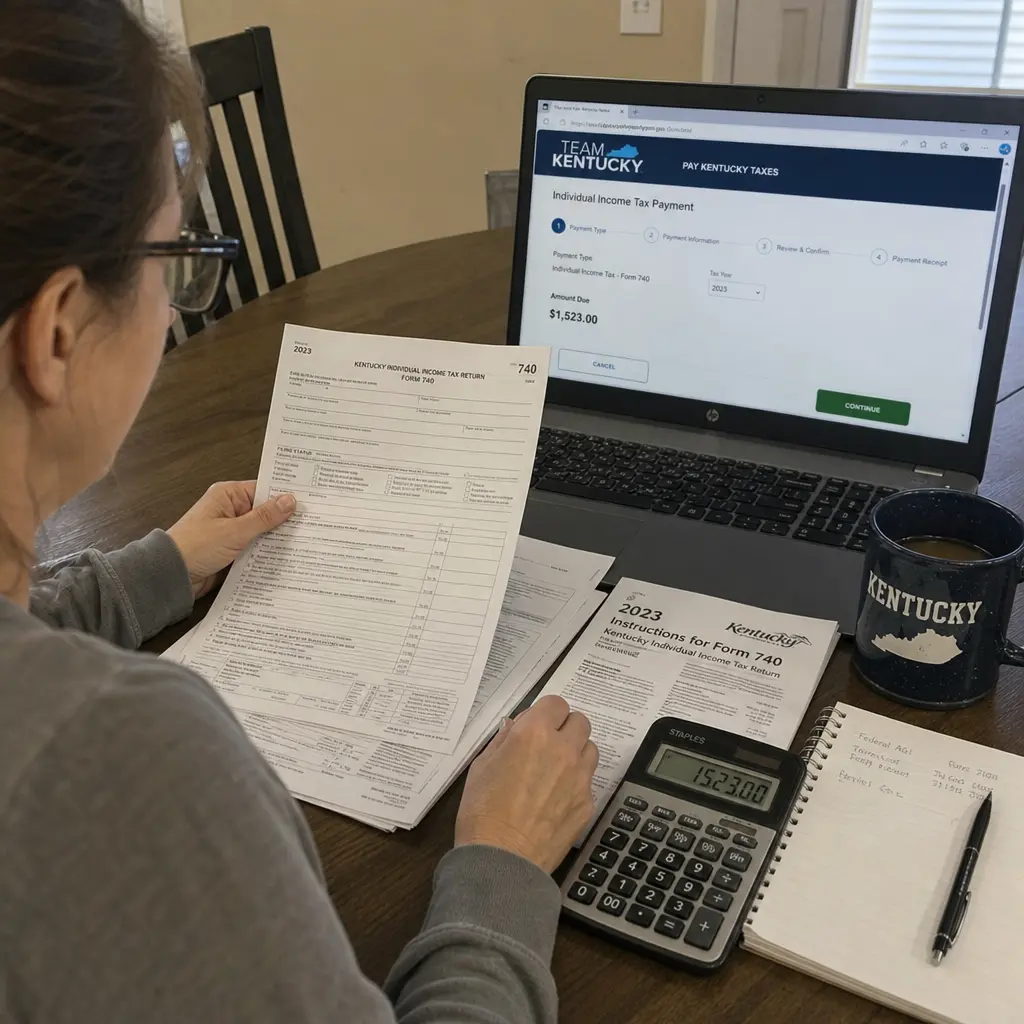
Paying Kentucky taxes is usually a matter of knowing which tax year you are handling, whether you are paying with a return, making an estimated payment, or responding to a bill, and choosing the right Kentucky Department of Revenue payment option. This guide walks through the Kentucky state tax payment process in plain English so you can avoid common delays, match your payment to the right form or notice, and keep better records for your Kentucky tax return.
Because tax rules and payment systems can change, always confirm details with the Kentucky Department of Revenue before you submit money. As of current state guidance, the individual Kentucky state income tax rate is 4.0% for tax years 2024 and 2025, and 3.5% for tax year 2026. (revenue.ky.gov)
How does the Kentucky state tax payment process work?
A Kentucky state tax payment generally starts with a return, estimate, voucher, or Department of Revenue bill that tells you what type of payment you are making. Individuals most often pay ky state taxes when filing Form 740 or 740-NP, making quarterly estimated payments, paying an electronic payment voucher, or resolving a balance due notice. The key is to connect the payment to the correct tax type, tax year, and taxpayer information so the state can apply it properly.
Kentucky individual income tax applies to all income earned by Kentucky residents and to Kentucky-source income earned by nonresidents. The Department of Revenue also explains that Kentucky individual income tax law is based on the Internal Revenue Code in effect as of December 31, 2024, with Kentucky-specific deductions and rules. (revenue.ky.gov)
That means your state tax Kentucky calculation may begin with federal income information, but it is not simply a copy of your federal return. Kentucky has its own forms, mailing addresses, credits, deductions, payment tools, and processing timelines. Treat your federal and Kentucky obligations as related but separate tasks.
The main Kentucky income tax payments individuals make
Most taxpayers encounter one of four payment situations. Understanding which one applies helps you avoid selecting the wrong option online or mailing a check without enough identifying information.
- Balance due with an annual return: You filed your Kentucky tax return and owe additional Kentucky state income tax after withholding, credits, and payments are applied.
- Estimated tax payment: You expect to owe tax because you have income without enough withholding, such as self-employment income, investment income, rental income, or retirement income.
- Electronic payment voucher: You filed electronically but still need to submit the related kentucky tax payment separately.
- Bill or notice payment: The Kentucky Department of Revenue sent a notice showing tax, penalty, interest, or another balance that needs attention.
Each category may use similar payment tools, but the details matter. A state tax payment for an estimate should be assigned to the correct tax year and estimated payment period. A payment on a bill should match the notice information. A balance due with a return should match the amount shown on the filed return.
Online payment options are usually the simplest path
The Kentucky Department of Revenue provides an electronic payment application for many tax payments, including individual income tax payments. The Department states that electronic payment can be made directly from a bank account or by credit card, although service provider fees may apply for some payment methods. (revenue.ky.gov)
For many taxpayers, paying online is easier because it creates a digital confirmation and reduces mailing delays. It can also help you avoid handwriting errors on vouchers or checks. Before you click submit, review the taxpayer name, Social Security number or account identifier, tax year, payment type, and amount.
A smart online payment routine looks like this:
- Start from an official Kentucky Department of Revenue page. Avoid search-result ads or unofficial sites that may charge unnecessary fees.
- Choose the correct payment category. Balance due, estimated payment, voucher payment, and bill payment are not always interchangeable.
- Match the tax year. A payment for a 2025 Kentucky tax return should not be accidentally applied to 2026 estimates.
- Save confirmation records. Download or print the confirmation page and keep it with your tax files.
- Verify your bank or card information. A typo can cause a rejected payment, late payment, or follow-up notice.
Can you pay Kentucky state taxes by mail?
Yes, Kentucky allows payment by check or money order in many individual income tax situations, but mailed payments require more care because they rely on correct forms, correct addresses, and delivery time. The Kentucky Department of Revenue says checks or money orders should be made payable to “KY State Treasurer” and mailed to the appropriate Department of Revenue address for the payment type. (revenue.ky.gov)
If you mail a kentucky state tax payment, do not assume the postmark alone solves every issue. Use the voucher or notice provided, write clearly, and include identifying details requested by the form instructions. If you are close to a deadline, consider using a trackable mailing method and keeping proof of mailing with your records.
For annual individual returns, Kentucky lists different mailing addresses depending on whether the return includes a payment, shows a refund or no payment, or uses a nonresident reciprocal form. The Department also lists an overnight address in Frankfort for certain deliveries. (revenue.ky.gov)
Estimated payments deserve extra attention
Estimated payments are one of the easiest parts of ky state taxes to overlook. They matter when income is not covered by enough withholding throughout the year. This can happen if you run a business, freelance, receive significant investment income, sell assets, or have multiple income sources that do not withhold enough Kentucky tax.
Kentucky says estimated individual income tax payments may be scheduled through its electronic payment system, and only ACH payments are accepted for those estimated payments at this time. (revenue.ky.gov)
A practical way to manage estimates is to review your situation when your income changes, not just at year-end. If your earnings rise, withholding drops, or you add untaxed income, your prior payment pattern may no longer fit. On the other hand, if your income falls, you may need to adjust future estimated payments rather than overpaying unnecessarily.
A simple estimated-payment checklist
Before making a Kentucky estimated payment, confirm:
- The payment is for Kentucky individual income tax, not federal tax.
- The tax year is correct.
- The payment amount matches your records or tax professional’s calculation.
- Your name and identifying information match your filed or expected return.
- You saved the confirmation number or mailing proof.
- You updated your personal bookkeeping so the payment is not forgotten at filing time.
This checklist is especially useful if you make both federal and state estimated payments. The systems are separate, and paying one does not automatically pay the other.
Filing and payment are connected, but not identical
A common misconception is that filing a Kentucky tax return and paying the balance are the same step. They may happen together, but they are still separate actions. You can file electronically and then pay through a separate state payment system, or you may file on paper and include a payment voucher.
This distinction matters because a return can be accepted while the payment is still missing, delayed, rejected, or misapplied. If your software says your Kentucky return was filed, that does not always mean your kentucky tax payment was successfully withdrawn. Look for a payment confirmation, bank draft record, canceled check, or card receipt.
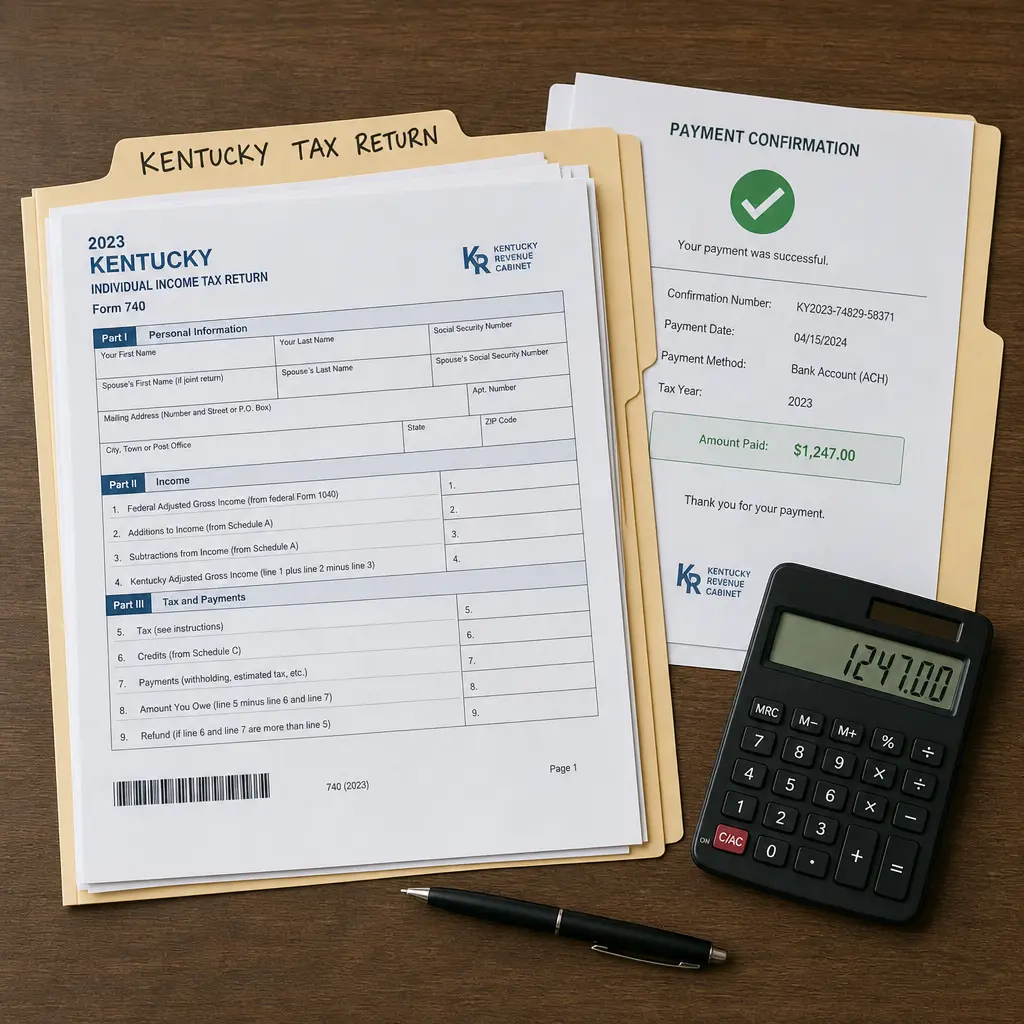
It also helps to keep a small tax folder for each year. Include your Kentucky tax return, federal return, W-2s, 1099s, payment confirmations, estimated payment records, notices, and correspondence. If the state later sends a balance notice, you will have the evidence needed to respond quickly.
What happens if you are due a Kentucky refund?
If your withholding and payments exceed your Kentucky state income tax, your filed return may show a refund instead of a balance due. Kentucky provides a “Where’s My Refund?” tool for current-year original returns, and the Department notes that electronically filed returns generally process faster than paper returns. (refund.ky.gov)
Refund processing can slow down if the return needs error correction, identity verification, or additional review. The Department also notes that amended and prior-year returns take longer than current-year original filings. (refund.ky.gov)
If you expected a refund but receive a bill, compare the notice with your filed return before paying. The issue could involve missing withholding, a math adjustment, a credit change, or a payment that did not post correctly. Respond by the notice deadline, even if you need more time to gather information.
How to avoid common Kentucky tax payment mistakes
Most payment problems are preventable. They usually come from mismatched information, missed deadlines, incomplete records, or confusion between federal and state systems.
Use these habits to make the Kentucky state tax payment process smoother:
- Do not pay Kentucky through an IRS tool. Federal and Kentucky payments go to different agencies.
- Use the exact name and identifying information from the return. Small mismatches can create research delays.
- Choose the right tax year. This is especially important around January, extension season, and estimated payment deadlines.
- Keep proof of payment. A bank statement is helpful, but a state confirmation or voucher copy is better.
- Read notices carefully. A notice may request payment, documentation, or both.
- Update your address. If you move, you do not want important tax mail going to an old address.
- Ask for help when needed. A tax professional can be useful if you have multistate income, business income, amended returns, or prior-year balances.
Records make the next tax season easier
Good records are not just for audits. They help you file accurately, claim the payments you already made, and avoid paying twice. This is particularly important if you make estimated payments or if your employer withholding changes during the year.
At a minimum, keep copies of Kentucky returns, payment confirmations, mailed vouchers, canceled checks, tax software receipts, and Department of Revenue notices. If you pay electronically, save both the confirmation and the bank record showing the withdrawal. If you mail a payment, keep the voucher copy and proof of mailing.
You should also label records by tax year, not just by calendar date. A payment made in January might apply to the prior year, the current year, or an estimated installment depending on what you selected. Clear labels reduce confusion when you prepare your next Kentucky tax return.
Final takeaway
The Kentucky tax payment process is manageable when you slow down and match the payment to the correct purpose: annual balance due, estimated tax, voucher, or bill. Use official Kentucky Department of Revenue resources, verify the tax year and payment type, and keep confirmation records every time you pay.
Whether you are handling a one-time kentucky state tax payment or planning recurring estimated payments, accuracy matters more than speed. A few minutes of review before submitting your payment can prevent weeks of notices, corrections, and unnecessary stress later.
Related guides
Understanding Sales Tax Calculators: A Guide
A sales tax calculator helps shoppers, business owners, and bookkeepers estimate the tax added to a purchase before checkout or invoicing.
· 7 min read
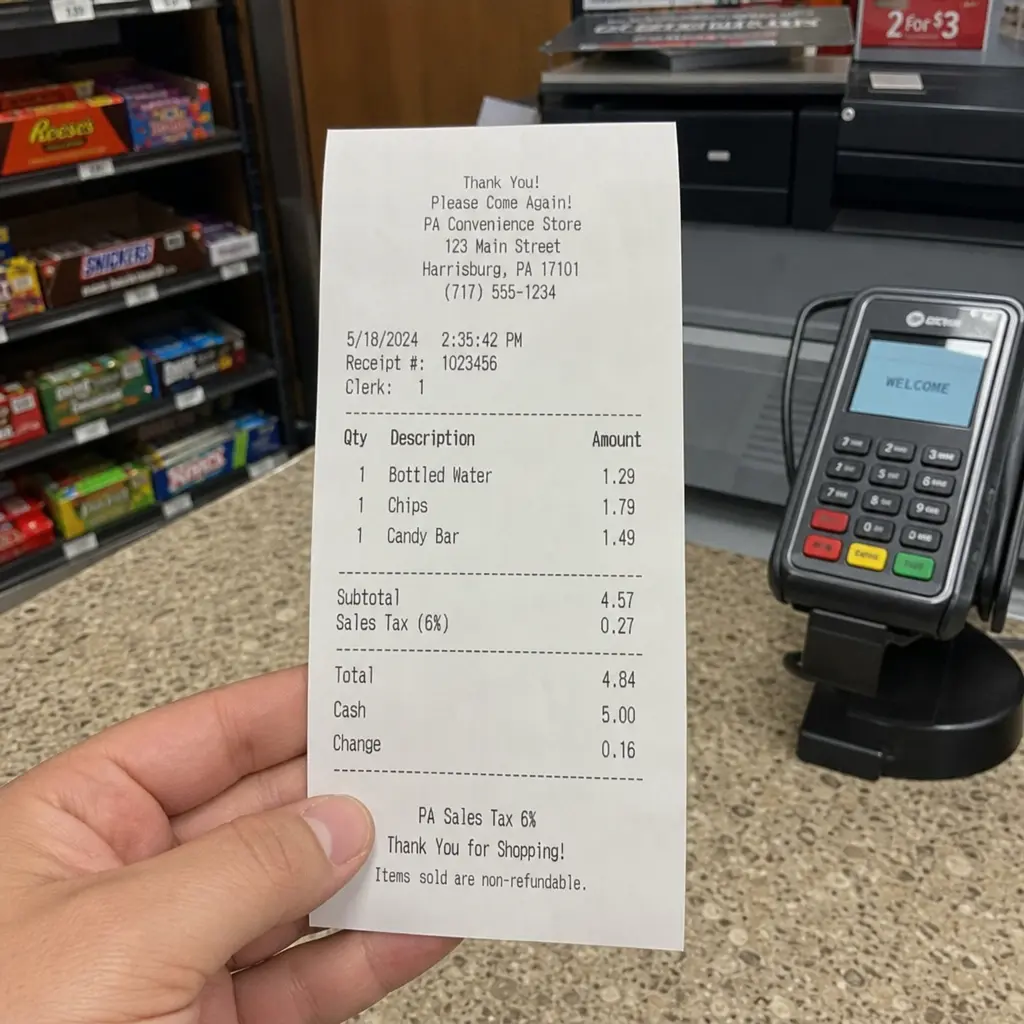
Understanding PA Sales Tax: Rates & Compliance
Understand the complexities of PA sales tax, local rates in Philadelphia and Allegheny County, and how it compares with other states like Michigan and Indiana. Learn compliance tips to ensure proper collection and avoid errors.
· 9 min read
Master Kentucky Estimated Tax Payments: Avoid Penalties
Kentucky estimated tax payments help taxpayers pay Kentucky income tax during the year when enough tax is not being withheld from wages, retirement income, or other payments.
· 8 min read