
Master Kentucky Estimated Tax Payments: Avoid Penalties
Navigate Kentucky estimated tax payments with ease. Learn who needs to pay, how to estimate your Kentucky taxable income, and meet deadlines to avoid penalties.
8 min read1,606 wordsZip Cost Ledger editorial
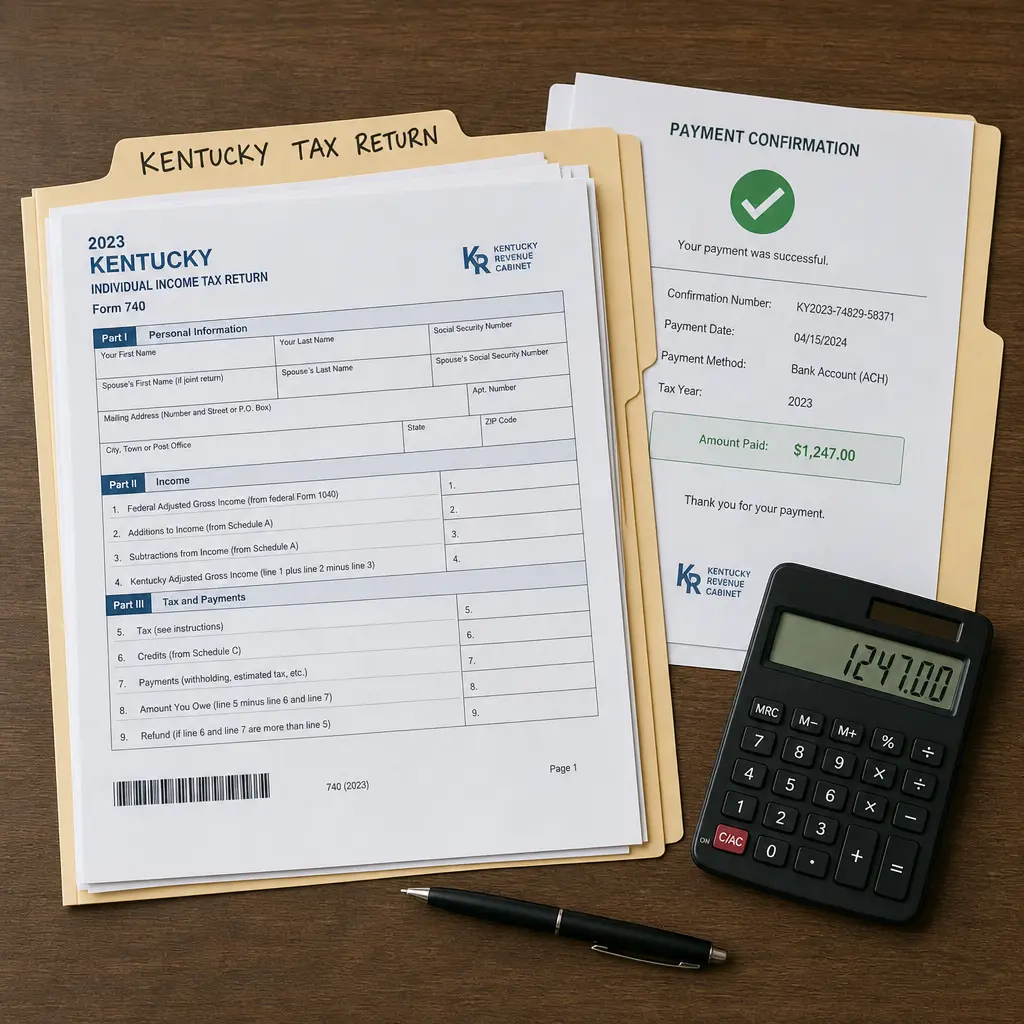
Kentucky estimated tax payments help taxpayers pay Kentucky income tax during the year when enough tax is not being withheld from wages, retirement income, or other payments. The process is most common for freelancers, business owners, investors, landlords, retirees with low withholding, and anyone whose Kentucky taxable income changes during the year. The goal is simple: estimate what you will owe, pay it in timely installments, and avoid a surprise balance or penalty at filing time.
Who needs to make Kentucky estimated tax payments?
You may need to make Kentucky estimated tax payments if your expected Kentucky income tax after credits and withholding is more than the state’s minimum threshold. For the 2026 Kentucky estimated tax worksheet, payment is not required when the estimated Kentucky income tax after withholding and credits is $500 or less; if it is higher, the worksheet generally compares 90% of the current-year tax with the prior-year liability safe-harbor amount to determine the required annual payment. (revenue.ky.gov)
This matters because Kentucky income tax applies to all income earned by Kentucky residents and to Kentucky-source income earned by nonresidents. A full-year resident typically files Form 740, while a part-year resident or full-year nonresident generally files Form 740-NP. (revenue.ky.gov)
Estimated payments are especially relevant when income does not arrive with Kentucky withholding already taken out. Common examples include:
- Self-employment or contract income reported without wage withholding
- Partnership, S corporation, or other pass-through income
- Rental income, farm income, or seasonal business income
- Taxable investment income, including some capital gains
- Retirement income where withholding is optional or too low
- A midyear job change, bonus, or other income spike
If your employer withholds enough Kentucky income tax from your paycheck, you may not need separate estimated payments. But if your income mix changes, withholding that worked last year may not work this year.
The basic Kentucky estimated tax payment process
The process begins with estimating your full-year Kentucky taxable income, reducing it by allowable deductions and adjustments, applying the correct Kentucky tax rate, subtracting credits and expected withholding, and dividing the required annual payment into installments. Kentucky’s 2026 worksheet starts with estimated wages and income not subject to withholding, subtracts adjustments and deductions, then applies the 2026 rate shown on the worksheet. (revenue.ky.gov)
A practical workflow looks like this:
- Project your annual income. Include wages, 1099 income, business profit, rental income, taxable retirement income, and other Kentucky-taxable amounts.
- Estimate deductions and adjustments. Use the Kentucky standard deduction or itemized deductions if applicable. The 2026 estimated tax worksheet lists a standard deduction of $3,360 for individuals, while estates or trusts enter zero on that line. (revenue.ky.gov)
- Apply the income tax rate. For 2026 estimated payments, the Kentucky worksheet calculates tax by multiplying estimated net income by 3.5%. (revenue.ky.gov)
- Subtract credits and withholding. Include expected Kentucky withholding and credits you reasonably expect to claim.
- Calculate the required annual payment. The worksheet uses the smaller of 90% of current-year estimated tax or the prior-year liability amount, with special rules noted for farmers, fishermen, and some higher-income taxpayers. (revenue.ky.gov)
- Pay on time and keep records. Track each installment date, amount, confirmation number, and any prior-year overpayment credit applied.
That recordkeeping step is easy to overlook. When you file your Kentucky return, you will need to report estimated payments accurately so they are credited against the right tax year.
Current tax rate KY taxpayers should understand
For Kentucky income tax planning, the tax rate depends on the tax year you are estimating. The Kentucky Department of Revenue’s current individual income tax page states a 4% rate, while its 2026 estimated tax worksheet and software developer guidance show a 3.5% individual or fiduciary income tax rate for 2026. (revenue.ky.gov)
That difference is not just trivia. If you are estimating a 2026 liability using a 2025 rate, your projection could be too high. If you are filing or amending an earlier year, however, do not assume the newest rate applies retroactively. Match the rate to the tax year, the form instructions, and your actual filing situation.
Kentucky’s flat-rate system can make the math feel more straightforward than a graduated bracket system, but your final liability still depends on your deductions, credits, residency status, and withholding. In other words, the rate is only one part of the estimate.
When are Kentucky estimated payments due?
For calendar-year taxpayers, Kentucky’s 2026 estimated payment schedule uses four installment dates: April 15, 2026; June 15, 2026; September 15, 2026; and January 15, 2027. If the need to pay estimated tax arises later in the year, the number of installments may be reduced based on when the income change occurs. (revenue.ky.gov)
The state instructions also explain that fiscal-year filers use the 15th day of the fourth, sixth, and ninth months of the fiscal year, plus the 15th day of the first month after the fiscal year ends. Late or insufficient installments may result in a penalty calculated under Kentucky law. (revenue.ky.gov)
If your income is uneven, do not automatically assume four equal payments reflect your real situation. Kentucky’s instructions recognize annualized income installments for taxpayers with seasonal income, a late-year capital gain, or other uneven income patterns, and point taxpayers to the federal annualized method for details. (revenue.ky.gov)
How to pay and avoid common mistakes
Kentucky allows estimated tax installments to be paid by check using Form 740-ES, through certain electronic filing authorization options, or by ACH debit through the Department of Revenue’s secure site. The individual income tax page also notes that electronic payments can be made directly from a bank account or by credit card, with service provider fees potentially applying. (revenue.ky.gov)
Before you submit a payment, verify the tax year and installment period. A payment made to the wrong year may not help with the penalty you were trying to avoid. Also make sure the name and Social Security number or FEIN match the return that will claim the payment.
A simple checklist can prevent most issues:
- Confirm whether the payment is for Form 740, Form 740-NP, or another Kentucky tax account.
- Use the correct tax year, especially around January payments.
- Save electronic confirmations or copies of mailed vouchers and checks.
- Recalculate after major income changes, not just at year-end.
- Do not include prior-year overpayment credits as new cash payments on a voucher.
- Coordinate Kentucky estimates with federal estimates, but do not assume the amounts are identical.
The last point is important. Kentucky estimated tax payments are separate from IRS estimated tax payments. You may owe one, both, or neither, depending on your income, withholding, deductions, credits, and residency.
What counts toward Kentucky taxable income?
Kentucky taxable income generally starts with income concepts tied to federal reporting, then adjusts for Kentucky-specific rules. The Department of Revenue notes that Kentucky individual income tax is based on the Internal Revenue Code in effect as of December 31, 2024, and allows itemized deductions plus certain income-reducing deductions under Kentucky law. (revenue.ky.gov)
For estimating purposes, focus on income that will actually be taxable to Kentucky. Residents usually look broadly at income earned during the year. Nonresidents and part-year residents need to pay closer attention to Kentucky-source income, such as income from work performed in Kentucky or business activity connected to the state.
Because credits and exclusions can affect the final number, an estimate does not have to be perfect to be useful. It should be reasonable, documented, and updated when your facts change. If you receive a large new contract, sell an investment, retire midyear, or move into or out of Kentucky, revisit the estimate instead of waiting until filing season.
Sales, use, and property taxes are separate from income estimates
A frequent planning mistake is mixing different Kentucky taxes together. Kentucky estimated tax payments discussed here apply to Kentucky income tax, not to sales tax, use tax, or property tax.
Kentucky sales and use tax is imposed at 6% of gross receipts or purchase price, and the state does not have local sales and use taxes. Sales tax applies to retail sales of tangible personal property, digital property, and certain services, while use tax generally backs up the sales tax for items purchased outside Kentucky for use, storage, or consumption in the state. (revenue.ky.gov)
That means a Kentucky sales tax calculator can be useful for purchase decisions or retail compliance, but it will not calculate your Kentucky income tax estimate. Likewise, a Kentucky property tax estimator may help a homeowner budget for real estate taxes, but property taxes are billed through a different system. Kentucky’s state real property tax rate is set annually by July 1 and local property tax rates vary by county, school district, and other taxing districts. (revenue.ky.gov)
Keeping these categories separate makes budgeting cleaner. Income tax estimates cover your annual Kentucky income tax liability. Sales and use tax affects taxable purchases and certain business filings. Property tax depends on assessed value and local rates.
A practical way to stay ahead
The best approach is to review your Kentucky estimated tax position at least quarterly. Start with your best income projection, use the correct Kentucky income tax rate for the year, subtract withholding and credits, and schedule payments before the due dates. If your income is unpredictable, build a habit of setting aside a percentage of untaxed income as it arrives.
Kentucky estimated tax payments are not about predicting the future perfectly. They are about staying close enough that filing season is manageable and penalties are less likely. When your situation involves business income, multistate work, a move, large investment gains, or uncertain deductions, consider getting help from a qualified tax professional before the deadline instead of after the notice arrives.
Related guides
Understanding Sales Tax Calculators: A Guide
A sales tax calculator helps shoppers, business owners, and bookkeepers estimate the tax added to a purchase before checkout or invoicing.
· 7 min read

Understanding PA Sales Tax: Rates & Compliance
Understand the complexities of PA sales tax, local rates in Philadelphia and Allegheny County, and how it compares with other states like Michigan and Indiana. Learn compliance tips to ensure proper collection and avoid errors.
· 9 min read
Kentucky State Tax Payment Guide: Avoid Delays & Errors
Paying Kentucky taxes is usually a matter of knowing which tax year you are handling, whether you are paying with a return, making an estimated payment, or responding to a bill, and choosing the right Kentucky Department of Revenue payment option.
· 9 min read