
Morgan County Property Tax & Hazard Guide: ZIP Code Insights
Discover how property tax and hazard assessments work in Morgan County, Colorado, by ZIP code. Get a clearer view of taxes and risks for informed decisions.
9 min read1,890 wordsZip Cost Ledger editorial
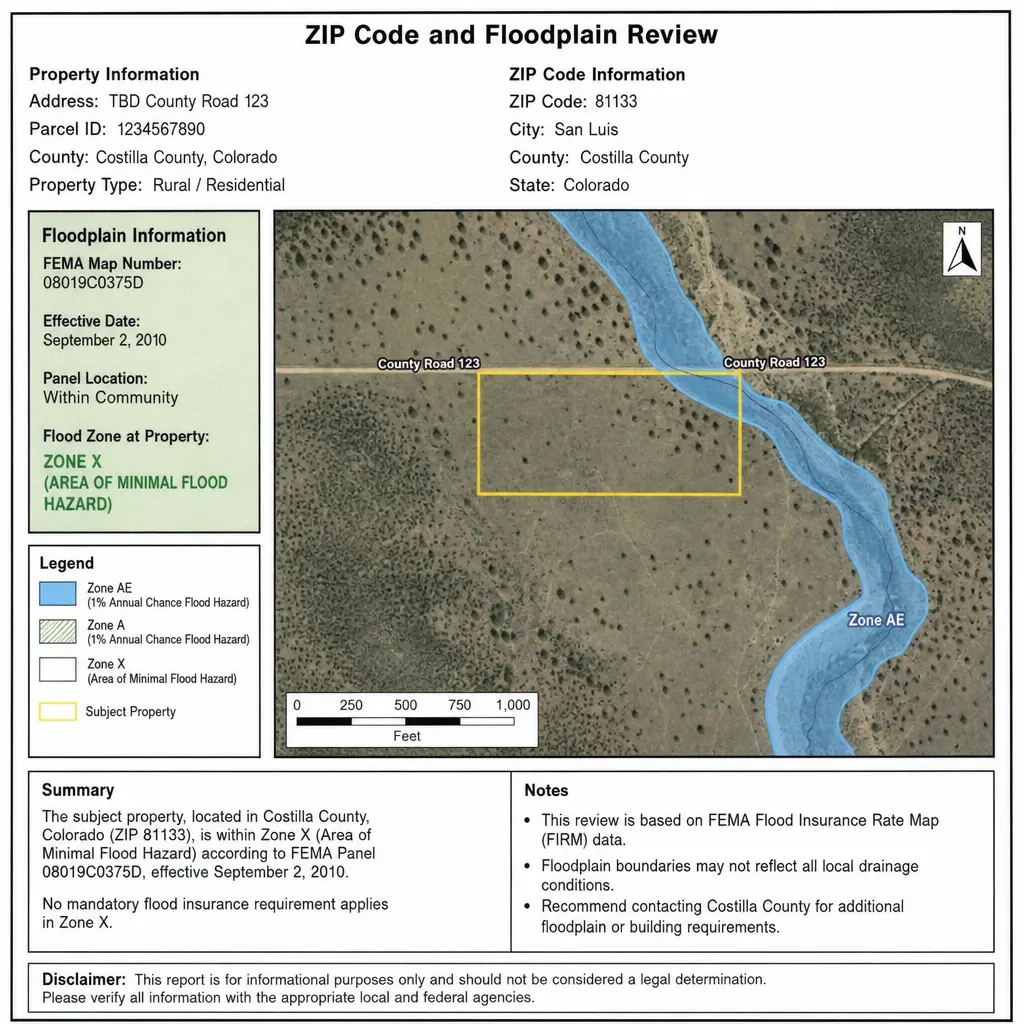
Property taxes in Morgan County, Colorado are shaped by your property’s actual value, its state-defined assessment rate, and the mill levies charged by the county, school district, municipality, and special districts that serve your parcel. That is why two properties with similar market values can have different bills when they sit in different tax areas, school boundaries, or service districts. This guide explains how Morgan County property tax works, how to read property tax rates, and why pairing tax by ZIP with a hazard assessment can give homeowners, buyers, and investors a clearer view of total property risk.
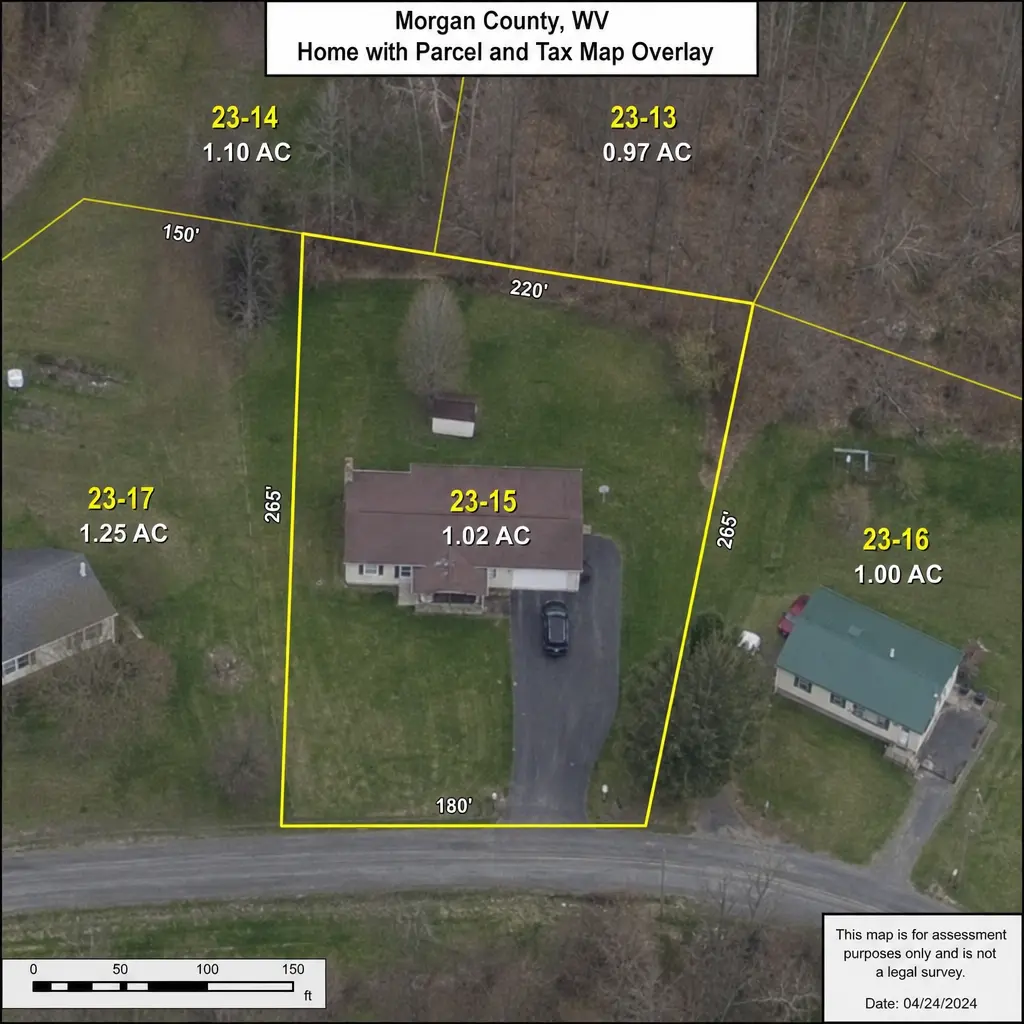
How are Morgan County property tax rates calculated?
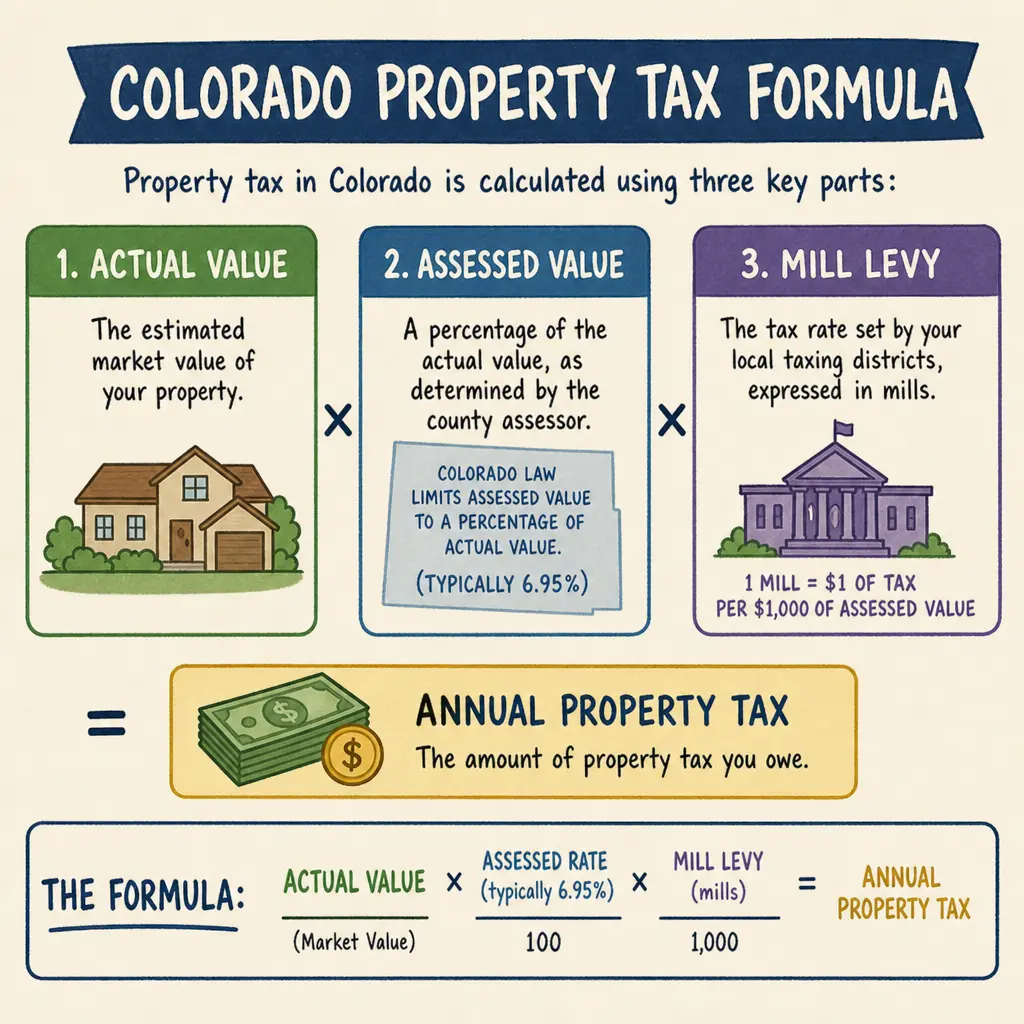
Morgan County property tax is calculated by applying the appropriate Colorado assessment rate to a property’s actual value, then multiplying the assessed value by the mill levies that apply to that parcel. Colorado’s 2026 property tax guidance explains that residential property now uses separate assessment rates for local government and school district taxes, and that taxing authorities set rates based on revenue needs and total assessed value in their boundaries. (spl.cde.state.co.us)
In plain English, your bill is not based on a single countywide percentage. It is built from layers. The Morgan County Assessor determines value and classification, while taxing entities determine mill levies. The Morgan County Assessor’s EagleWeb property search includes ownership, sales information, tax history, assessment history, values, and mill levies, which makes it a practical starting point for checking a specific parcel. (morgancountyco-assessor.tylerhost.net)
The basic flow looks like this:
- Actual value is established. This is the property value determined for assessment purposes, based on Colorado valuation rules.
- Classification is applied. Residential, agricultural, commercial, vacant land, and other classes may be assessed differently.
- Assessment rate creates assessed value. The assessment rate converts actual value into taxable assessed value.
- Mill levies are added. County, school, municipal, fire, water, sanitation, library, and other districts may apply depending on location.
- The tax bill is produced. Assessed value multiplied by applicable mill levies equals the property tax due.
This is why broad averages can mislead. A parcel in Fort Morgan, Brush, Wiggins, Log Lane Village, or an unincorporated area may fall under a different combination of taxing authorities even when the properties are in the same county.
The three numbers that matter most
When people search for “property tax rates” or “morgan county taxes,” they often want one quick number. In reality, three numbers do most of the work: actual value, assessment rate, and total mill levy. Understanding each one helps you estimate a bill and spot why a tax amount changed.
Actual value is the assessor’s estimate for property tax purposes. Colorado guidance says residential property is valued using the market approach, and for tax years 2025 and 2026, comparable residential sales generally come from January 1, 2023 through June 30, 2024, unless more data is needed from earlier periods. (spl.cde.state.co.us)
Assessment rate is the percentage used to convert actual value into assessed value. For 2026, Colorado’s published property tax guidance shows a 6.8% local government assessed rate and a 7.05% school district assessed rate in its residential example, reflecting the split assessment structure that began in 2025. (spl.cde.state.co.us)
Mill levy is the tax rate applied to assessed value. One mill generally represents one dollar of tax per $1,000 of assessed value. Because mill levies vary by tax district, the only reliable way to understand Morgan County property tax for a specific home, farm, commercial parcel, or vacant lot is to look up the parcel directly rather than relying only on a countywide estimate.
Why tax by ZIP can be helpful but incomplete
Searching tax by ZIP is useful for orientation, especially when comparing Colorado zip codes across Morgan County. ZIP codes such as 80701 for Fort Morgan, 80723 for Brush, 80654 for Wiggins, 80705 for Log Lane Village, 80653 for Weldona, and others can help organize a first-pass comparison of location, market conditions, and local exposure. A ZIP-level view is especially helpful when someone is researching Morgan County, Colorado — property tax and hazard by ZIP code for a move, purchase, refinance, or investment review. (zipdatamaps.com)
But ZIP codes are postal areas, not tax districts. A ZIP code can cross municipal, school, fire, or special district boundaries, and some ZIP codes extend beyond a single county. That means a “Morgan County by ZIP” estimate may be useful for screening neighborhoods, but it should not be treated as a final property tax number.
Use ZIP-level research to compare areas, then verify parcel-level details with the assessor or treasurer records. This two-step approach keeps the research efficient while reducing the chance of budgeting from an inaccurate average.
A practical checklist for reviewing a Morgan County property
Before buying, refinancing, appealing, or budgeting for a property, gather the information that directly affects the bill. A few minutes of document review can prevent confusion later, especially if the property sits near a city boundary, special district, or floodplain.
Use this checklist:
- Look up the parcel in Morgan County EagleWeb. Confirm owner, situs address, classification, actual value, assessment history, and available mill levy details. (morgancountyco-assessor.tylerhost.net)
- Compare the property’s tax area, not just the ZIP code. Two parcels in the same ZIP may have different overlapping districts.
- Review the Notice of Valuation. Colorado notices list property location, classification, relevant characteristics, and actual value for prior and current years. (spl.cde.state.co.us)
- Check whether exemptions may apply. Seniors, qualifying veterans with a disability, surviving spouses of certain veterans, Gold Star spouses, and some senior homeowners may have exemption or classification options if they meet specific requirements. (morgancounty.colorado.gov)
- Confirm payment and deferral options. Eligible seniors and active military service members may be able to use Colorado’s property tax deferral program, with claims filed through the county treasurer during the stated application window. (morgancounty.colorado.gov)
- Pair tax review with a hazard assessment. Floodplain, wildfire, severe weather, access, and insurance factors can affect the real cost of owning property even when they do not appear directly on the tax bill.
The point is not to become a tax professional. It is to know which records matter, where surprises usually come from, and what questions to ask before making a financial decision.
Hazard assessment belongs beside the tax review
A property’s tax bill tells only part of the ownership story. A hazard assessment helps explain risks that may influence insurance, maintenance, financing, land use, emergency planning, and long-term resilience. In Morgan County, flood exposure deserves special attention because the county zoning regulations adopt Colorado regulatory floodplain rules and recognize that flood hazard areas can create health, safety, property, commerce, public expenditure, and tax-base impacts. (morgancounty.colorado.gov)
That does not mean every property in a ZIP code carries the same hazard. Flood risk can change parcel by parcel, especially near waterways, drainage corridors, irrigation infrastructure, low-lying land, and mapped special flood hazard areas. The county’s floodplain regulations reference FEMA Flood Insurance Studies and Flood Insurance Rate Maps for Morgan County, so parcel-level map review is more meaningful than ZIP-level assumptions. (morgancounty.colorado.gov)
A useful hazard review may include:
- Floodplain status and elevation requirements
- Wildfire and grassfire exposure, especially in rural or open areas
- Severe weather patterns, hail exposure, and wind risk
- Road access during storms or flooding
- Proximity to emergency services
- Insurance requirements and deductibles
- Zoning overlays, building limitations, and permit considerations
For buyers, this can change the conversation from “What is the monthly payment?” to “What is the realistic cost of owning and protecting this property?” For current owners, it can support better budgeting, mitigation planning, and insurance conversations.
What changes your bill from year to year?
Morgan County property tax can change when value changes, assessment rates change, exemptions change, or mill levies change. A rising market value is only one possible cause. If a school district, city, county, or special district adjusts its levy, the final bill can shift even if the property itself has not changed much.
State law also matters. Colorado has updated residential assessment structures in recent years, including the use of separate residential assessment rates for school district and local government levies. HB24B-1001 set different valuation rules depending on statewide actual value growth and includes provisions for residential, qualified-senior primary residence, commercial, agricultural, and other property classes. (leg.colorado.gov)
Property-level changes can matter too. New construction, additions, demolition, land classification changes, business personal property, agricultural status, or a corrected record can affect the taxable picture. If a bill looks wrong, start by comparing the current notice, prior assessment history, classification, exemptions, and tax area before assuming the mill levy alone caused the increase.
Reading the numbers without getting lost
The best way to understand morgan county property tax is to move from broad to specific. Start with the ZIP code to understand the general location. Then identify the parcel, tax area, classification, actual value, assessment rate, and applicable mill levies.
If you are comparing properties, avoid judging only by last year’s taxes. A prior owner may have had an exemption, a different classification, or a lower assessed value that will not carry forward in the way you expect. Likewise, vacant land, agricultural property, residential property, and commercial property can behave differently under Colorado property tax rules.
A simple review sequence works well:
- Search by address, owner, or parcel number.
- Confirm the property is the correct parcel.
- Note the actual value and classification.
- Review the tax district or mill levy details.
- Check exemption history or eligibility.
- Review ZIP-level context and parcel-level hazards.
- Ask the assessor or treasurer for clarification if the records do not make sense.
This approach gives you a more reliable picture than a single online estimate. It also helps you ask better questions when speaking with a lender, real estate agent, insurance provider, local official, or tax advisor.
Final takeaway
Understanding Morgan County property tax rates means looking beyond one percentage or one ZIP code. The bill is built from Colorado assessment rules, Morgan County parcel values, local mill levies, exemptions, and the exact tax area serving the property.
For the clearest view, combine parcel-level tax research with ZIP-level context and a realistic hazard assessment. That combination helps homeowners, buyers, and investors compare properties more thoughtfully, budget with fewer surprises, and understand the full ownership picture in Morgan County, Colorado.
Common questions
Can I calculate my Morgan County property tax based only on my ZIP code?
No. A ZIP code is for postal delivery, whereas property taxes are based on exact taxing districts. Two properties in the same ZIP code can fall into different school, fire, or special districts, leading to different final tax bills.
What is the difference between actual value and assessed value in Colorado?
Actual value is the assessor's estimate of a property's market value based on recent comparable sales. The assessed value is calculated by multiplying this actual value by a state-defined assessment rate, and this assessed value is what the mill levies are applied to.
Why is a hazard assessment important alongside a property tax review in Morgan County?
Hazards like floodplains and severe weather can significantly affect the true cost of owning a home. While not directly on the tax bill, issues like required flood insurance or wind deductibles add to your monthly expenses and affect property resilience.
Related guides
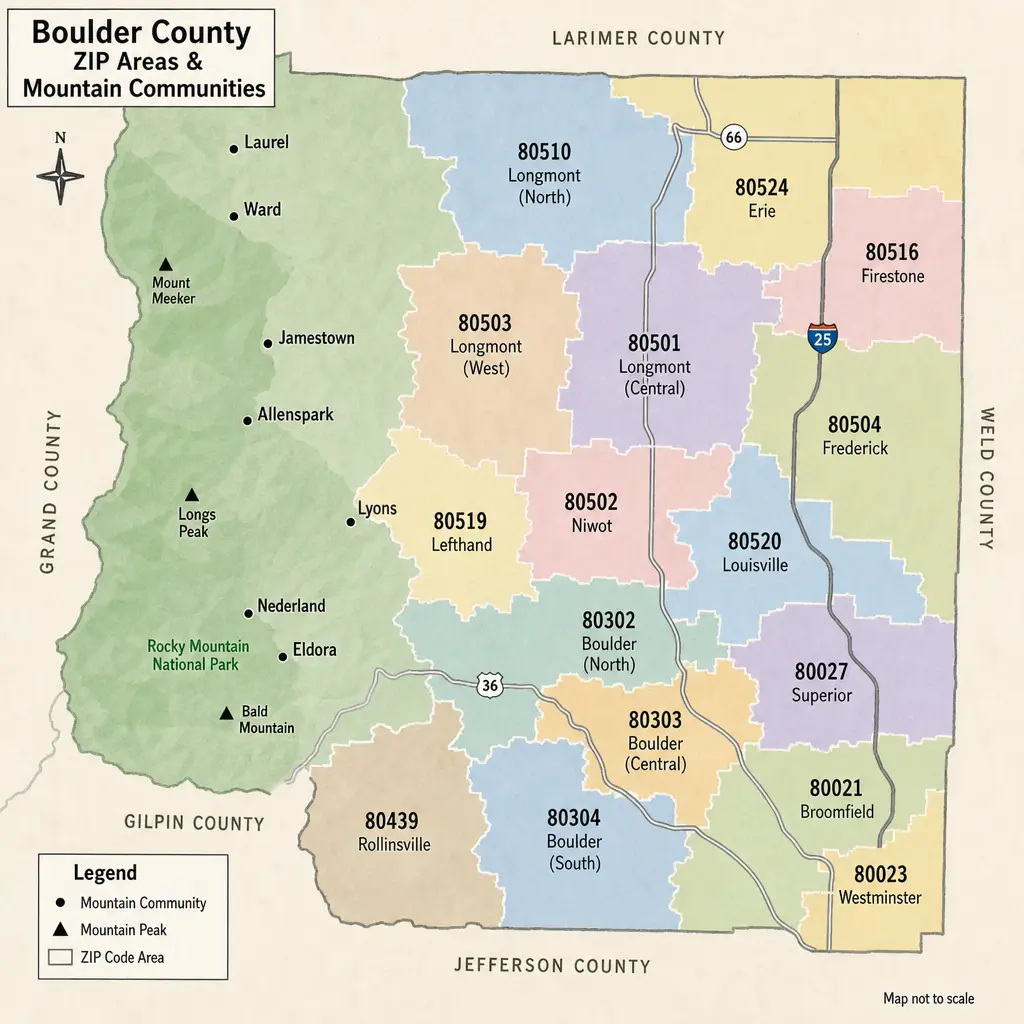
Boulder County Property Tax Guide: Rates & Hazards by ZIP
Boulder County property taxes can look different from one ZIP code to the next, but ZIP codes are only a starting point. The real bill is driven by a property’s actual value, Colorado assessment rules, and the specific school, city, fire, library, water, and special districts tied to that parcel. This guide explains how to read Boulder County taxes by area, how hazard considerations fit into the picture, and what to check before buying, budgeting, or comparing homes.
· 9 min read
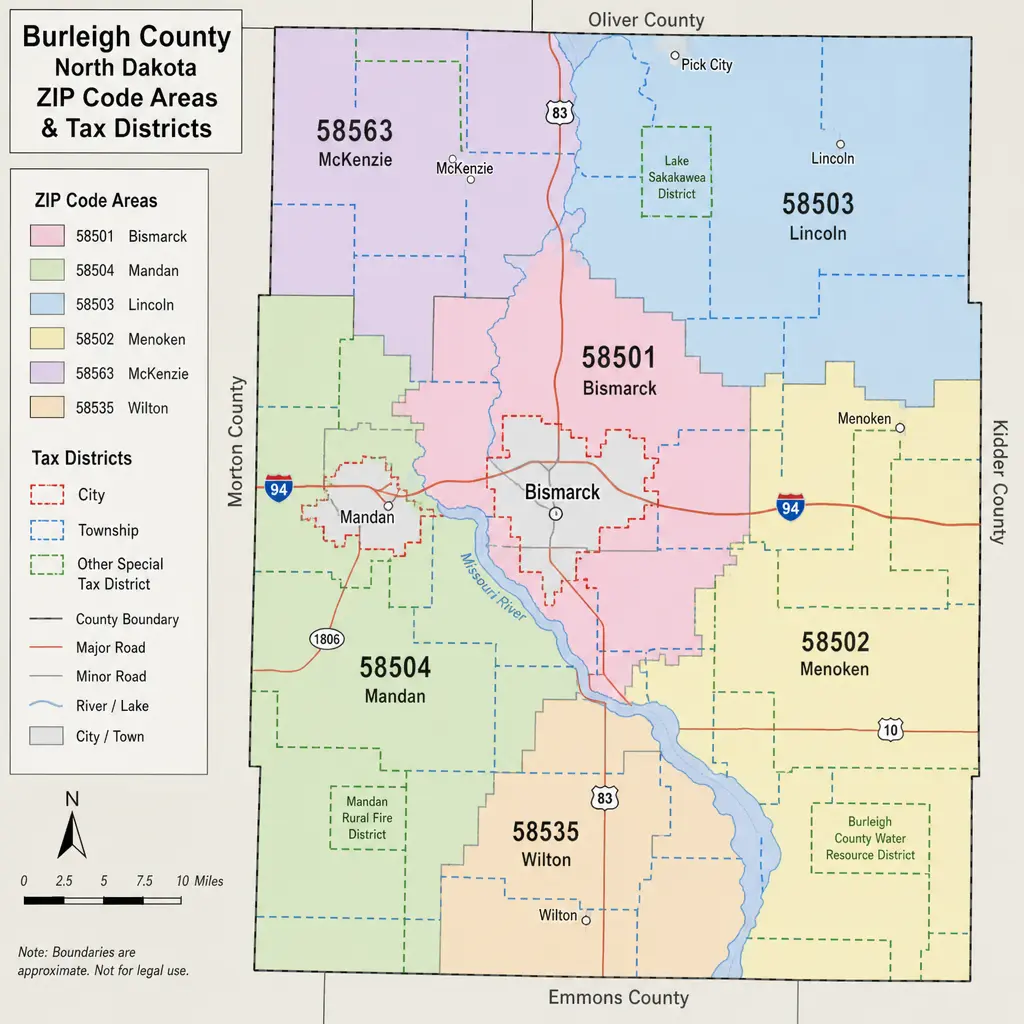
Burleigh County Property Tax & Hazard Guide by ZIP
Burleigh County property tax is based on property value, taxable classification, and the mill levies assigned to the property’s taxing district—not simply on the ZIP code printed in the mailing address. For homeowners, buyers, and investors comparing Burleigh County, North Dakota — property tax and hazard by ZIP code, the smartest approach is to use ZIP codes as a starting point, then confirm the parcel’s city, township, school district, special assessments, and local hazard context.
· 7 min read
Mesa County Property Tax & Hazard Guide by ZIP
Mesa County property taxes are based on a Colorado assessment system, not a single countywide percentage you can apply to every home. Your bill depends on your property’s actual value, its assessed value, the taxing districts tied to the parcel, and any applicable local or special district levies.
· 9 min read