
New Jersey Property Tax Rates: County & ZIP Guide
How New Jersey property tax rates are calculated by county and ZIP code, why they vary so widely, and where to find reliable figures.
10 min read1,945 wordsZip Cost Ledger editorial
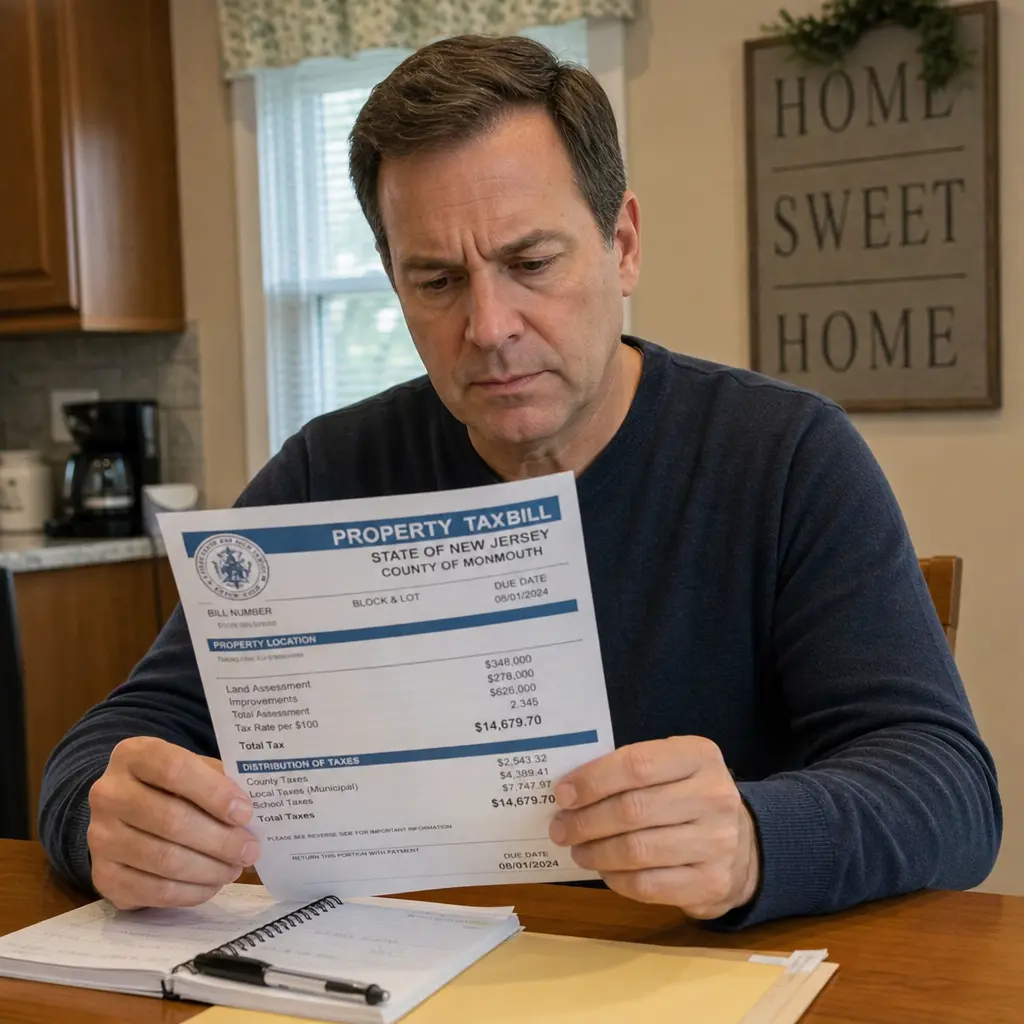
New Jersey property tax rates can feel confusing because they are local, not statewide, and the number you see online may not be the number used to calculate your actual bill. This guide explains how NJ property tax works, why rates vary so much by municipality, and how to look up reliable property tax information NJ homeowners, buyers, and investors can use.
How are New Jersey property tax rates calculated?
New Jersey property tax is calculated by applying a local general tax rate to a property’s assessed value. The state explains that county, municipal, and school budget needs drive the amount to be raised, and a town’s general tax rate is found by dividing that amount by the total assessed value of taxable property in the town. Individual bills are then calculated by multiplying the rate by the property’s assessed value. (nj.gov)
That structure is why two similar homes in different towns can have very different tax bills. Local school costs, municipal services, county budgets, debt, assessed-value levels, and tax-base strength all affect the final number. In New Jersey, the State does not set local budgets and does not receive the property taxes collected; the money supports local and county functions, including schools. (nj.gov)
The most important distinction is between assessed value and market value. Your assessed value is the value used for tax billing, but it may be lower, higher, or roughly aligned with what the home could sell for depending on when the municipality last revalued or reassessed property. That is why comparing only the tax rate can be misleading.
The general tax rate is not the same as the effective tax rate
New Jersey publishes both general and effective rates, and they serve different purposes. The General Tax Rate is the multiplier used to compute the property tax bill and is expressed as dollars per $100 of taxable assessed value. The Effective Tax Rate is a statistical comparison tool that assumes properties are at 100% valuation, and the state specifically notes it is not used to compute a tax bill. (nj.gov)
Here is a simple way to think about it:
- General tax rate: The billing rate applied to your assessed value.
- Effective tax rate: A comparison rate that helps you evaluate one district against another.
- Assessment ratio: A measure that helps connect assessed values to estimated true market values.
- Actual tax bill: The number that matters for budgeting, based on your property’s assessment, local rate, exemptions, deductions, and any eligible relief.
For homeowners researching property tax rates in NJ, this difference matters. A town with a higher general rate is not automatically more expensive than a town with a lower one if their assessment practices differ. For apples-to-apples comparisons, look at the effective rate, the average tax bill, and the specific parcel’s tax history.
Why rates vary by county, town, and neighborhood
Searches for property taxes by county NJ or NJ county property tax rates are useful starting points, but county-level numbers are broad averages. New Jersey property tax is administered through local taxing districts, so the municipality usually tells you more than the county alone. The Division of Taxation publishes general tax rates by county and municipality, while the Department of Community Affairs provides annual property tax tables, abstracts of ratables, property value classification files, and related municipal finance data. (nj.gov) (nj.gov)
County differences still matter. Counties help apportion certain costs, and county boards of taxation are part of the assessment and equalization process. New Jersey’s equalization program is designed to treat taxing districts equitably by estimating the aggregate true value of real estate in each district through assessment-sales ratio analysis. (nj.gov)
Within a county, however, local conditions can pull bills in different directions:
- School budgets: In many communities, schools are a major component of the bill.
- Municipal services: Police, fire, public works, libraries, recreation, and administration all require funding.
- County obligations: County services and debt are shared across municipalities.
- Taxable property base: A town with more commercial, industrial, or high-value residential property may spread costs differently.
- Assessment cycles: Revaluations and reassessments can shift the burden among properties even when budgets do not change dramatically.
This is why New Jersey real estate tax rates should be reviewed at the municipal and parcel level before buying, selling, refinancing, or appealing an assessment.
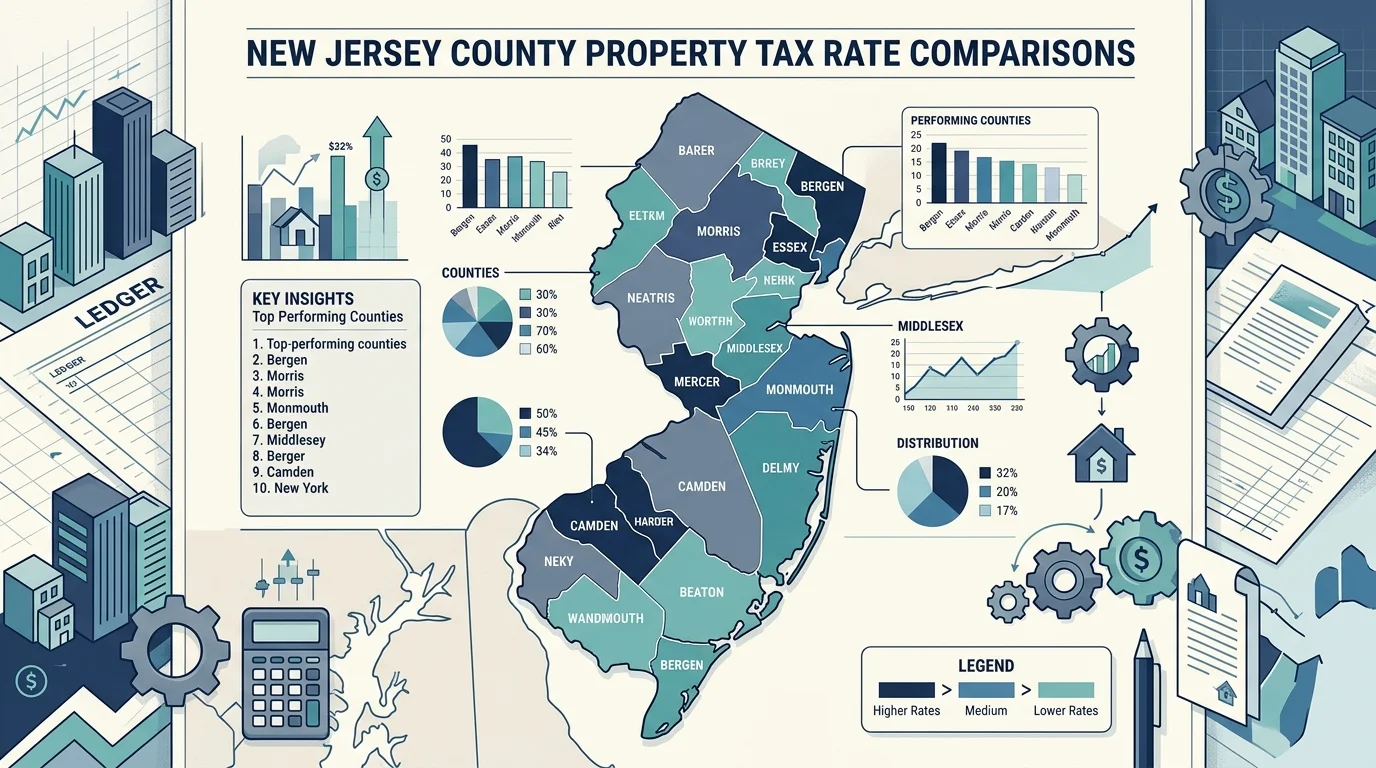
Can you compare New Jersey property tax rates by county and ZIP code?
You can compare New Jersey property tax rates by county and ZIP code as a rough research exercise, but ZIP code is not the official taxing unit. ZIP codes can cross municipal or even county boundaries, while NJ property tax rates are tied to taxing districts and individual assessments. For accuracy, use ZIP code only to narrow your search, then confirm the municipality, block and lot, assessed value, prior-year taxes, and applicable local tax rate.
The State’s property tax transparency tools can help you move from a broad location search to a parcel-specific review. New Jersey’s Property Tax data is assessed annually by the local assessor and submitted to the county board of taxation, and the state’s online property query can display parcel details such as location, owner information, block and lot, assessed land and building value, prior-year taxes, and property classification. (nj.gov)
A practical lookup process looks like this:
- Start with the address. Confirm the municipality, not just the mailing city or ZIP code.
- Find the block and lot. These identifiers help avoid confusing similar addresses.
- Check the assessed value. Separate land and improvement values when available.
- Review the prior tax bill. Look for recent jumps, added assessments, or credits.
- Compare municipal data. Use official state tables for general and effective rates.
- Ask about pending changes. Revaluations, reassessments, renovations, or new budgets may affect future bills.
For buyers, this step is especially important because listing sites may show historical taxes that do not reflect future assessments, improvements, or ownership-related changes.
Reading your NJ property tax percentage correctly
The phrase NJ property tax percentage is common, but New Jersey often expresses the general tax rate as dollars per $100 of assessed value rather than a simple percent of market value. For example, a general rate that looks like 3.000 does not mean 3% of the home’s sale price unless the assessed value equals market value and the rate is converted correctly. The official general rate is a multiplier for assessed value, while the effective rate is better for comparing districts at assumed full value. (nj.gov)
When reviewing a property, ask three questions:
- What value is being taxed? The assessed value may differ from market value.
- Which rate am I looking at? General rates calculate bills; effective rates compare districts.
- What changed recently? Renovations, reassessments, appeals, and budget changes can affect future taxes.
This also helps explain why a low purchase price does not always mean a low tax bill. If a home has an unusually low assessment because it has not been updated in years, a reassessment could bring the taxable value closer to current market conditions. Conversely, if the assessment is high compared with comparable sales, the owner may consider whether an appeal is appropriate.
Where to find reliable property tax information in NJ
The best sources for property tax information NJ residents need are official state, county, and municipal resources. The Division of Taxation’s statistical page includes current and historical files for general and effective tax rates by county and municipality, average residential statistics, equalized valuations, assessment files, and property tax appeals data. (nj.gov)
Use these sources together rather than relying on one number:
- Municipal tax collector: Current tax bill, payment schedule, sewer or local charges, and balances.
- Municipal tax assessor: Assessment details, property record cards, and revaluation information.
- County board of taxation: County-level assessment records, appeal forms, and hearing information.
- NJ Division of Taxation: General rules, rate files, relief programs, deductions, and statistical data.
- NJ property transparency tools: Parcel-level assessment and prior-tax data for research.
If you are evaluating a home purchase, verify the taxes directly with the municipality before finalizing your budget. If you are comparing towns, look beyond the rate and examine the average bill, home values, services, commute, school district, and long-term affordability.
Relief programs and appeals can change the real cost
Your gross NJ property tax bill is not always your final out-of-pocket cost. New Jersey offers property tax relief programs, and current state materials reference Senior Freeze, ANCHOR, and Stay NJ as major relief programs. The Division of Taxation also maintains information on deductions, exemptions, and abatements, including senior, disabled-person, and veteran-related benefits. (nj.gov) (nj.gov)
Eligibility rules, filing periods, benefit amounts, and income limits can change, so homeowners should confirm current requirements before assuming they qualify. Relief programs do not change the municipal rate itself, but they can reduce the net cost for eligible residents.
Appeals are different. An appeal generally challenges the assessment, not the tax rate or the local budget. New Jersey’s assessment and appeals guidance states that petitions to the County Board of Taxation or State Tax Court must generally be filed and received by April 1, with alternative deadlines for Burlington, Gloucester, and Monmouth Counties and special rules for certain high-value assessments. (nj.gov)
Consider reviewing an assessment if:
- Comparable properties have lower assessments relative to market value.
- The property record contains errors in size, features, condition, or classification.
- A reassessment or revaluation created a value that appears unsupported.
- Recent arms-length sales suggest the assessed value is too high.
A smarter way to compare NJ property tax costs
The most useful comparison combines rate data with real property details. If you are comparing two towns, do not stop at the headline rate. Look at a realistic home price, the assessed value, the effective tax rate, the latest tax bill, any planned reassessment, and whether you may qualify for relief.
A simple buyer or homeowner checklist:
- Confirm the municipality and county.
- Look up the parcel, block, and lot.
- Review the latest assessed land and building values.
- Check the most recent tax bill with the tax collector.
- Compare both general and effective tax rates.
- Ask whether a revaluation, reassessment, or added assessment is pending.
- Review relief programs and appeal deadlines early.
Understanding New Jersey property tax rates is less about memorizing one statewide number and more about knowing which local numbers matter. Once you separate general rates from effective rates, county averages from municipal data, and ZIP code searches from parcel-level records, NJ property tax becomes much easier to evaluate with confidence. For local comparisons, explore our New Jersey state tax overview or compare ZIP codes side by side across taxing jurisdictions.
Common questions
What is the difference between a general tax rate and an effective tax rate in New Jersey?
The general tax rate is the actual multiplier applied to a property's assessed value to calculate the tax bill. The effective tax rate is a statistical tool used to compare towns by assuming all properties are assessed at 100 percent of their market value.
Why do New Jersey property tax rates vary so widely between municipalities?
Rates vary because property taxes fund local services, including county budgets, municipal services, and school districts. Differences in school costs, local debt, and the total taxable value of a town all require different tax rates to meet the budget.
Does the State of New Jersey set my local property tax rate?
No. The state does not set local budgets or collect the property tax revenue. The tax amount is driven by the funding needs of the local school district, municipality, and county where the property is located.
Related guides
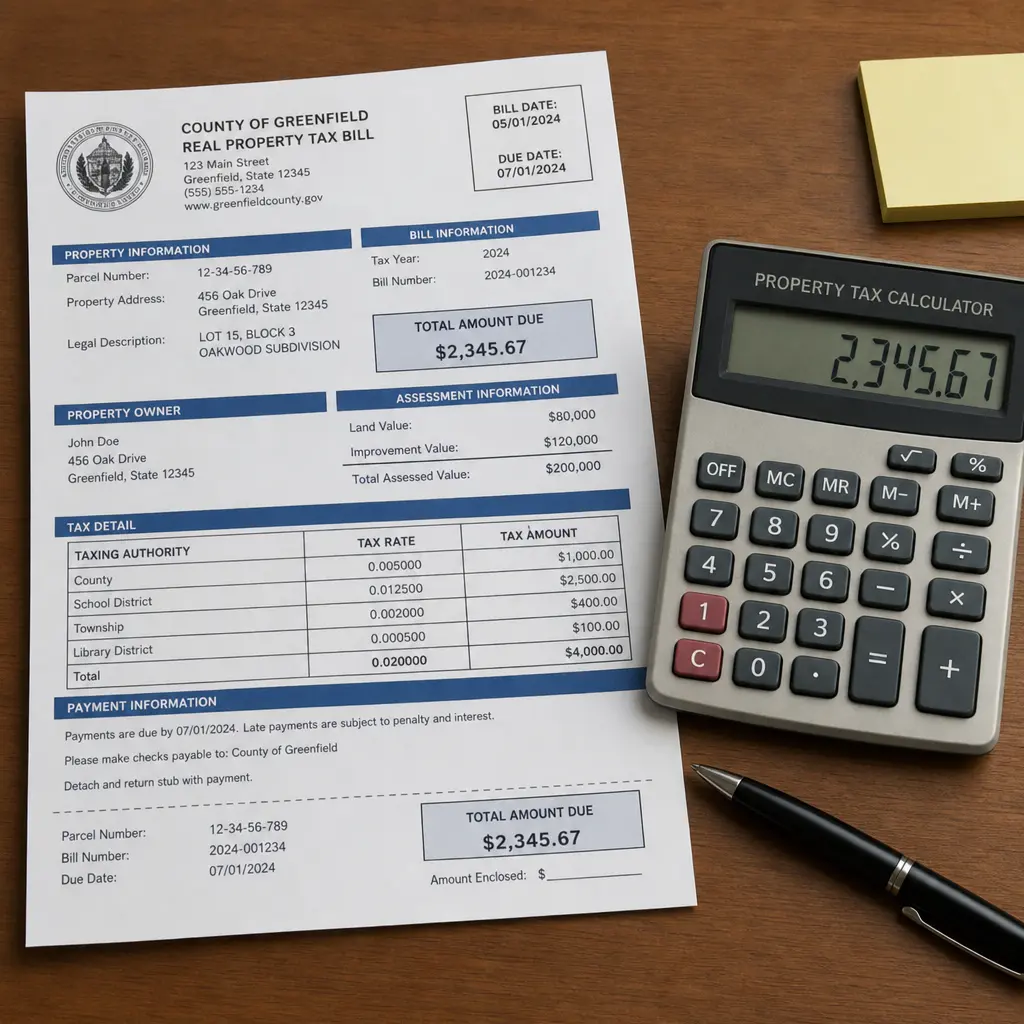
Jackson County, Colorado Property Tax Guide
Property tax rates in a place called Jackson County can be confusing because there are many Jackson Counties, plus cities named Jackson in different states. This guide explains how Jackson County property tax rates are usually calculated, how to use a Jackson County property tax lookup, and why location, assessment rules, exemptions, and hazard considerations can change what a property owner actually pays.
· 7 min read
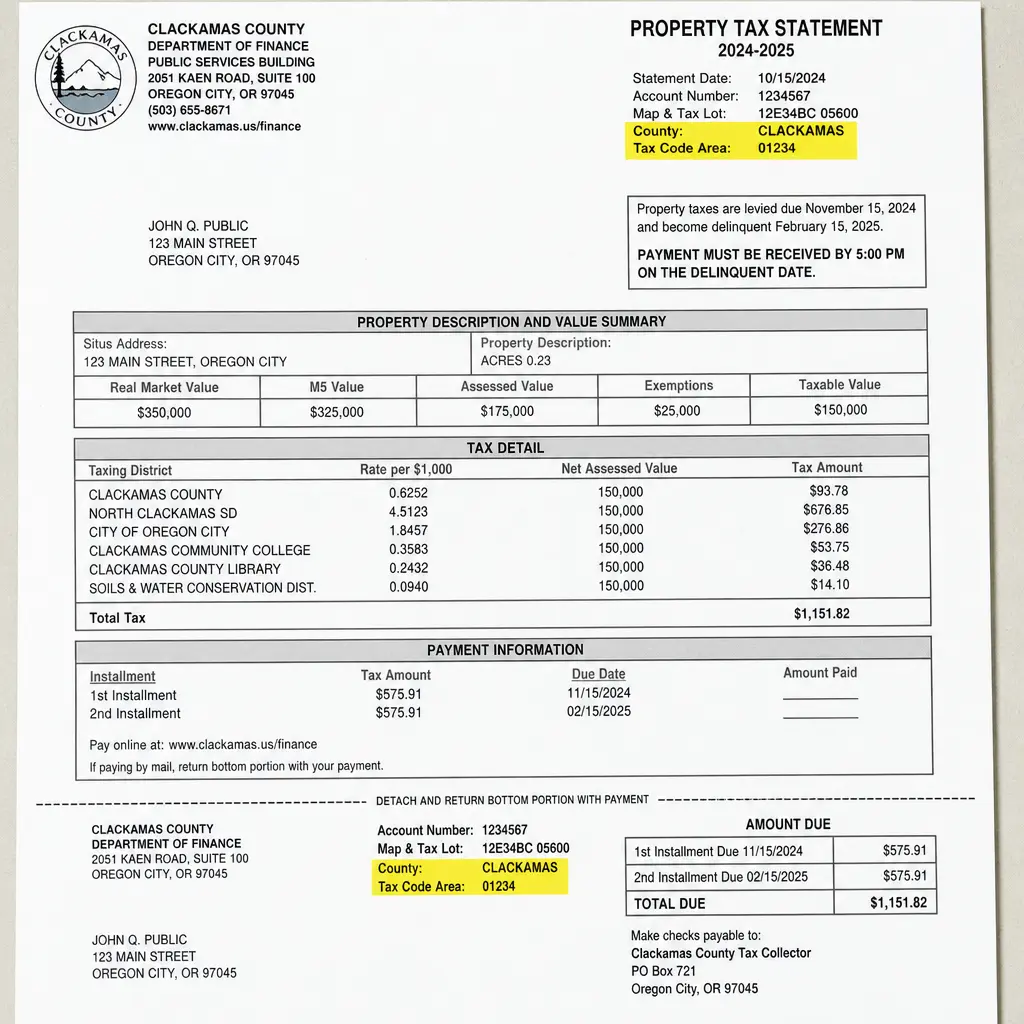
Oregon Property Tax Rates by County & ZIP Code Guide
Oregon property taxes can feel confusing because there is no single statewide rate that applies to every home.
· 8 min read
New York Property Tax Rates by County and ZIP Code
New York property taxes are local charges based on a property’s taxable assessment, the budgets of the jurisdictions that serve it, and the tax rates adopted for those jurisdictions.
· 9 min read